KELT's First Year of SHARP Bird Monitoring
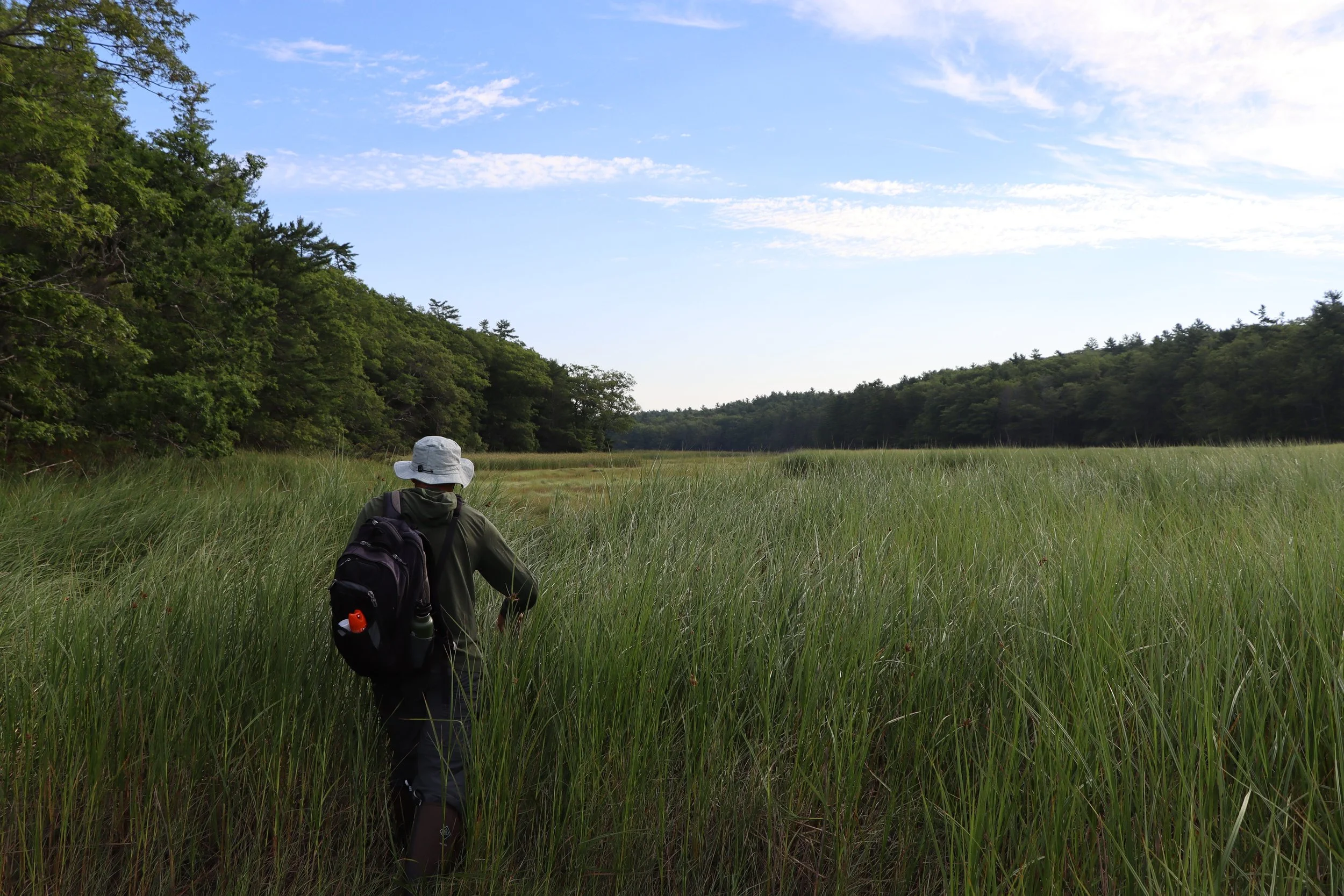
Swett Marsh
This year, KELT participated in the Saltmarsh Habitat and Avian Research Program (SHARP) for the first time in our history. This is a study we’re really excited to be a part of and be able to contribute data to, as it’s a large collaborative effort between USFWS, universities across the coast, and many other conservation based organizations like KELT.
The core of this study is bird monitoring. We’re trying to find specific species that may be using these marshes for habitat or even possibly for nesting. The three species we’re looking for are clapper rails, Virginia rails, and American bitterns, which are known to be quite elusive creatures. These birds prefer to stay hidden in the marsh and out of view, so you’re a lot more likely to hear them than to see them. Listening for these species is the main observation method and while we’re out, we hope to do some useful monitoring of other species like a couple of sparrow species that are going through significant population declines.
I was fortunate enough to be able to join one of our teams that had been out monitoring, in hopes to see or hear some of these species. I started by meeting two of our amazing volunteers for this study, Jane and Jeff, at 7am. Our location for the day was in Arrowsic, at Swett Marsh. Before we went to the first site, we made sure we were prepared for the fieldwork ahead. Even though it was going to be a hot day, we made sure we had layers covering us head to toe. If you’ve ever gotten the chance to spend time in Arrowsic/Georgetown in the summer, then you’ll know there are not many places on earth that have more intense mosquitos. Immediately after stepping out of the car, we were already being swarmed. Fortunately, this is something we were used to and we didn’t let it drown out the excitement for the day ahead.
We started by walking down Flying Point Road for a couple of minutes until it was time to say goodbye to flat ground and start our adventure into the marsh for our first of six monitoring sites. These sites are not very far apart but walking in a marsh can be quite treacherous. Part of the reason KELT is conducting this study at Swett Marsh is because it’s a restoration site. For years, KELT has been working on restoring Swett Marsh to help the overall health of the marsh. A lot of the problems the marsh is experiencing is due to the agricultural history at this site. There are a lot of ditches and embankments all across the marsh that do not allow water to flow and drain properly, causing harm to a lot of the plants that are essential to a salt marsh. This is a problem KELT has been helping to improve and a study like SHARP can be a good measure of progress for tracking how the native species are using the marsh.
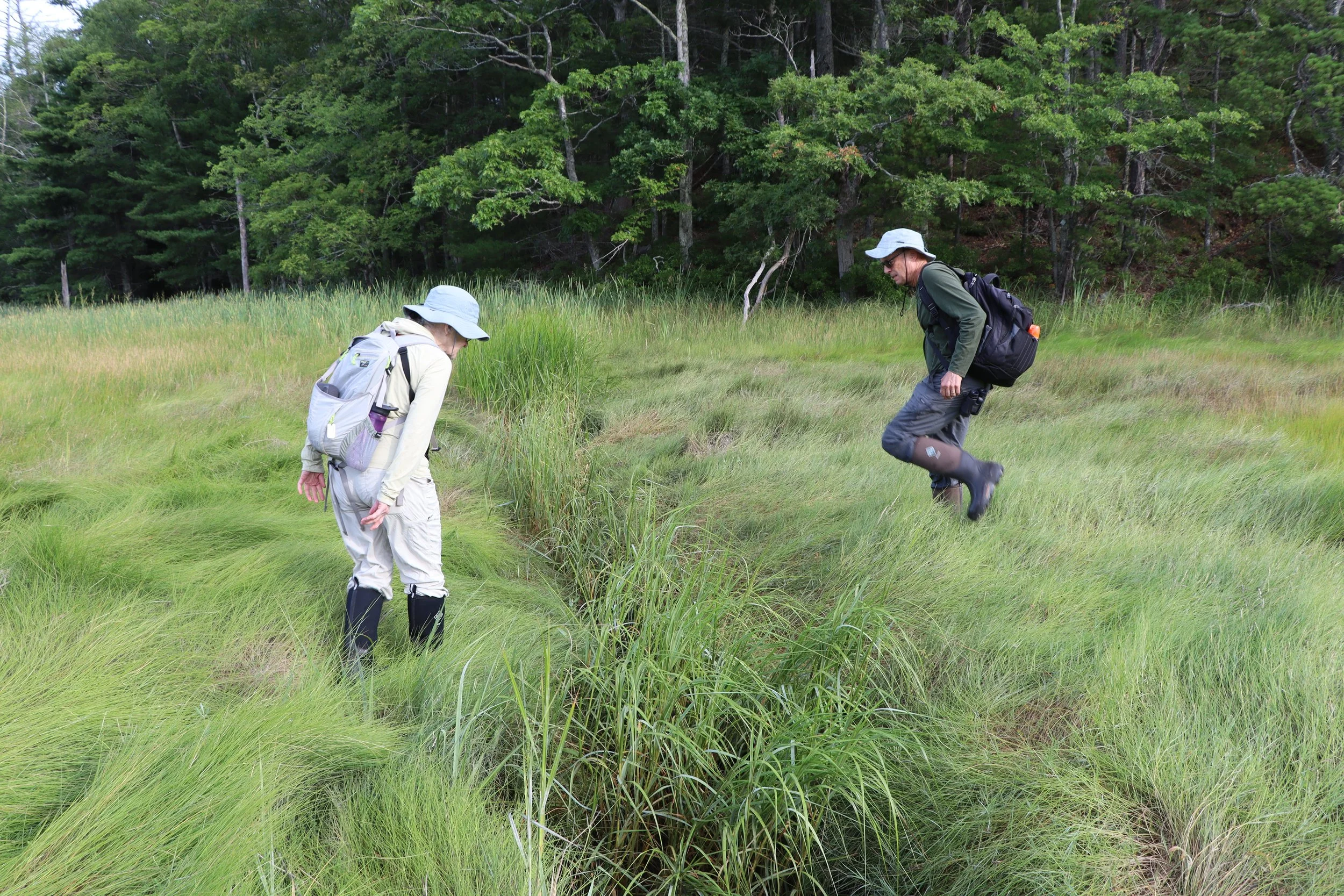
One of many ditches we came across
These ditches and embankments found in this marsh aren’t great for the health of the marsh but they also aren’t great for the health of those walking in it. You need to watch every step while out in the marsh, as there are many hidden dangers. There are ditches spread out all over the place and many are over 3 feet deep and almost completely hidden by vegetation. We worked as a team as we traversed the marsh, often helping each other over these ditches or pointing out the easiest crossing point. We continued to walk through the marsh and we were almost to our first site when we got to the tallest patch of saltmarsh grass we had experienced yet. Even though it’s pretty slow moving through grass like this, I can’t help but enjoy getting immersed into this unique habitat. Once we cleared the grass, we had arrived at our first monitoring site.
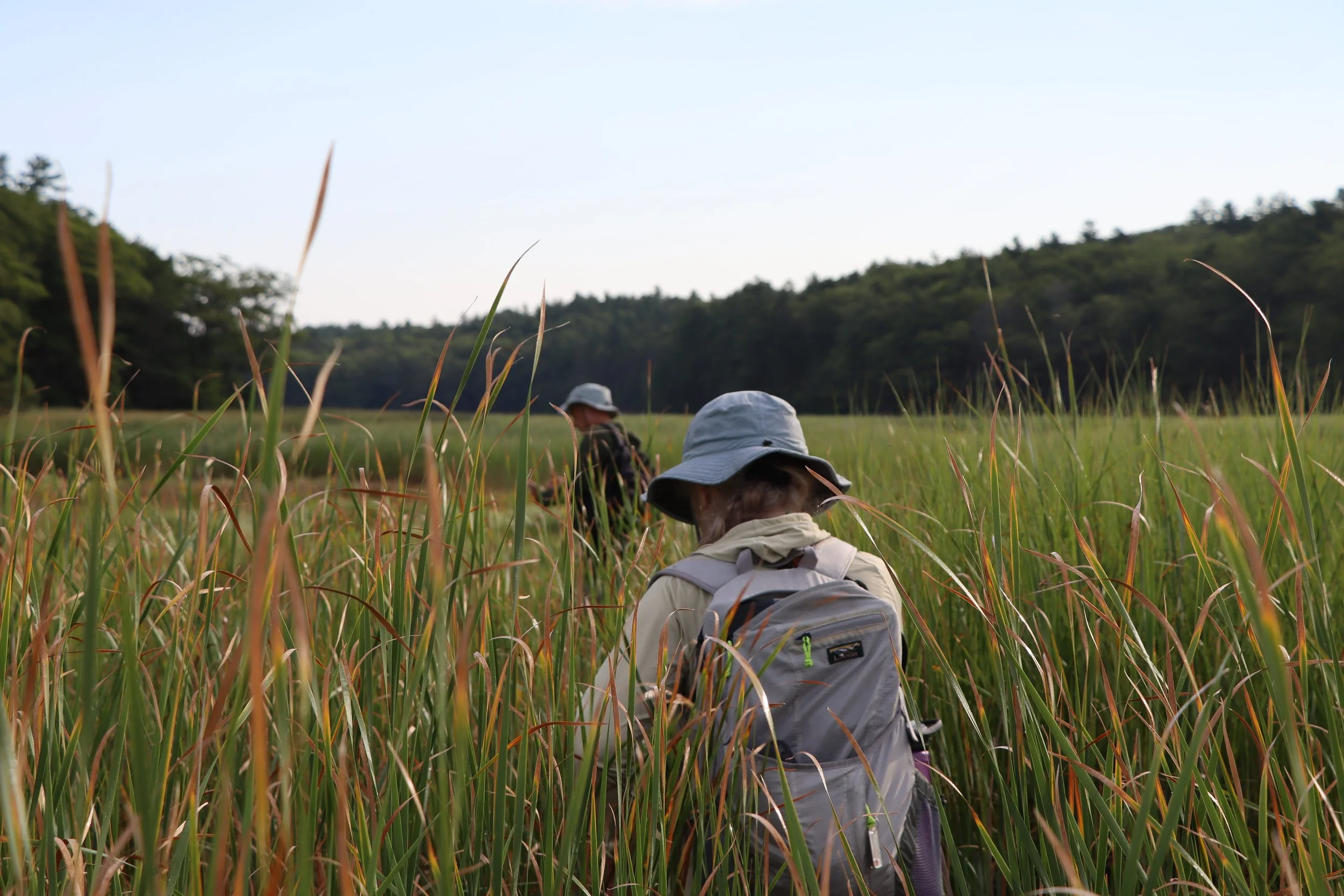
The marsh grass that marks site one.
We started by slightly spreading out and facing separation directions to try and do our best to make sure we don’t miss any birds moving through the marsh. Even though we’re going to be mostly relying by ear for monitoring, we all had binoculars with us to try and add any visual observations to the study as well. Jeff and I were going to focus on observing, while Jane was going to be recording all of our observations on a data sheet. Monitoring starts by observing and listening for five minutes straight. Over these five minutes, we concentrate our ears the best we can and quickly tell Jane every species we hear or see, and the relative distance away. It’s not easy to record, because at the minute mark, we start fresh and have to record every bird we see, even if we saw or heard it just a minute ago. We are rapidly firing off, “swamp sparrow, song sparrow, red eyed vireo, red winged black bird!”, but in those five minutes, we don’t hear any of the species of focus. Once the five minutes end, we head to the call back section of the monitoring. If you haven’t heard of callbacks in birding before, it’s when you play the call of a species in hopes to draw the species out to hear or even see it. This practice is rather frowned upon in the recreational birding world as you’re distracting the bird from its natural behaviors. In a scientific study like this, it’s a really important tool for ultimately helping with the conservation of these species.
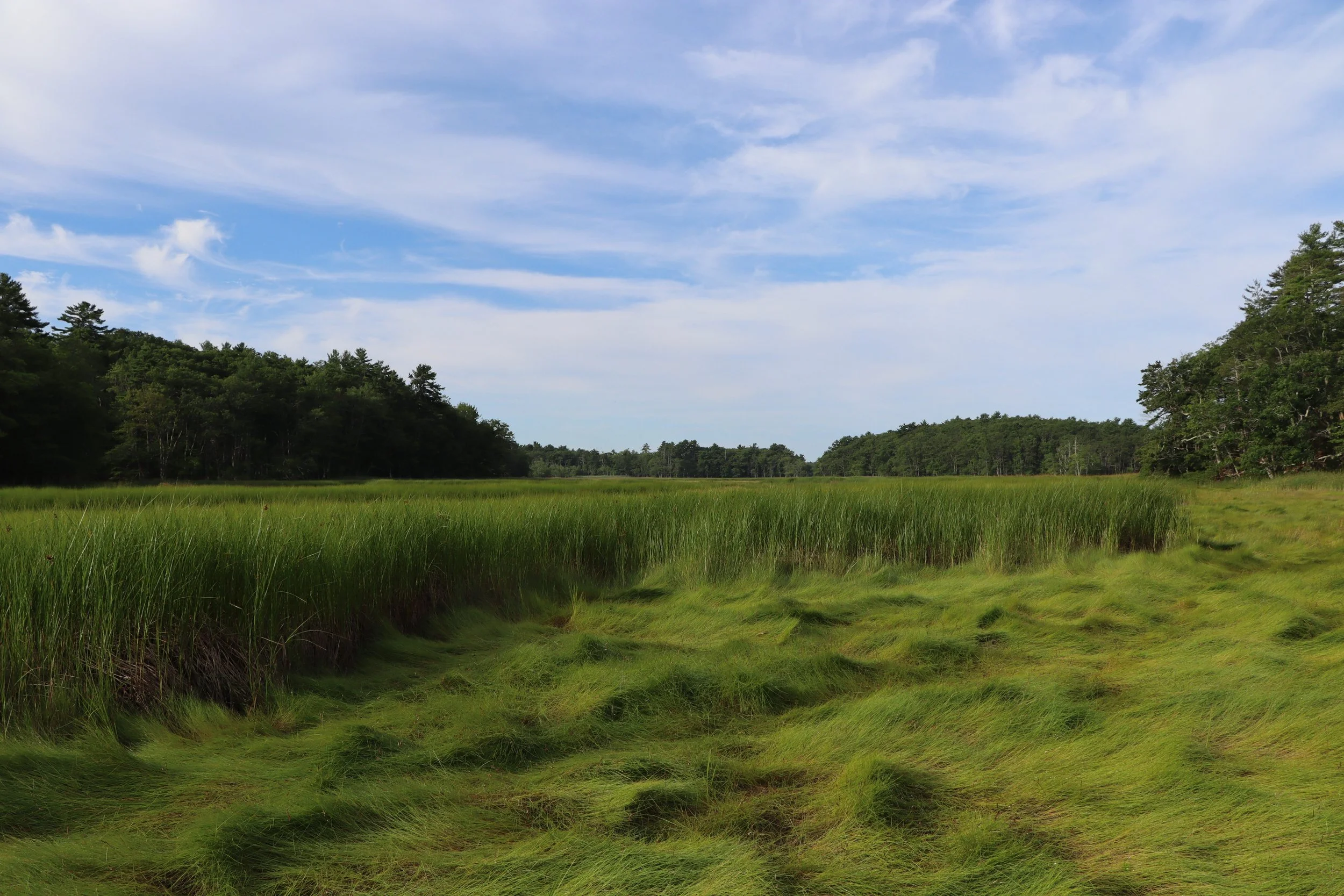
Our view from site 1
We played out loud the American Bittern call. Nothing. We played out the funky, raspy call of the clapper rail. Nothing still. Our last call, the Virginia rail, comes up with nothing as well. I can’t say I was surprised. I have been birding in Maine for awhile now, so I knew these species were rare to come across. After packing up our speaker and other equipment, it was time to head to our second site.
Our next site was on the other side of flying point road, so we got the pleasure of walking on stable ground for a few moments before it was back into the marsh. We arrived at our 2nd site and went through the same process with similar results. We didn’t find any of the target species but we were able to add a few new birds to the list, like the Eastern phoebe and the common yellowthroat.
We were half way to our third monitoring site when we heard a very unique call, which sounded like water sizzling in a hot pan. Jane and I made eye contact immediately, excitement in our eyes, because we both realized we had heard a Nelson’s sparrow. Now, to the average person, a Nelson's sparrow wouldn’t be that exciting of a bird. It has very basic sparrow coloring and characteristics and ultimately isn’t that spectacular looking. But this is a bird that has a very specific nesting habitat. It really only likes to nest in marshes, and that doesn’t make it the easiest bird to find. Plus, their populations have been declining and they are currently a bird of special concern in Maine. For these reasons, this was actually one of the species we were hoping to record today.
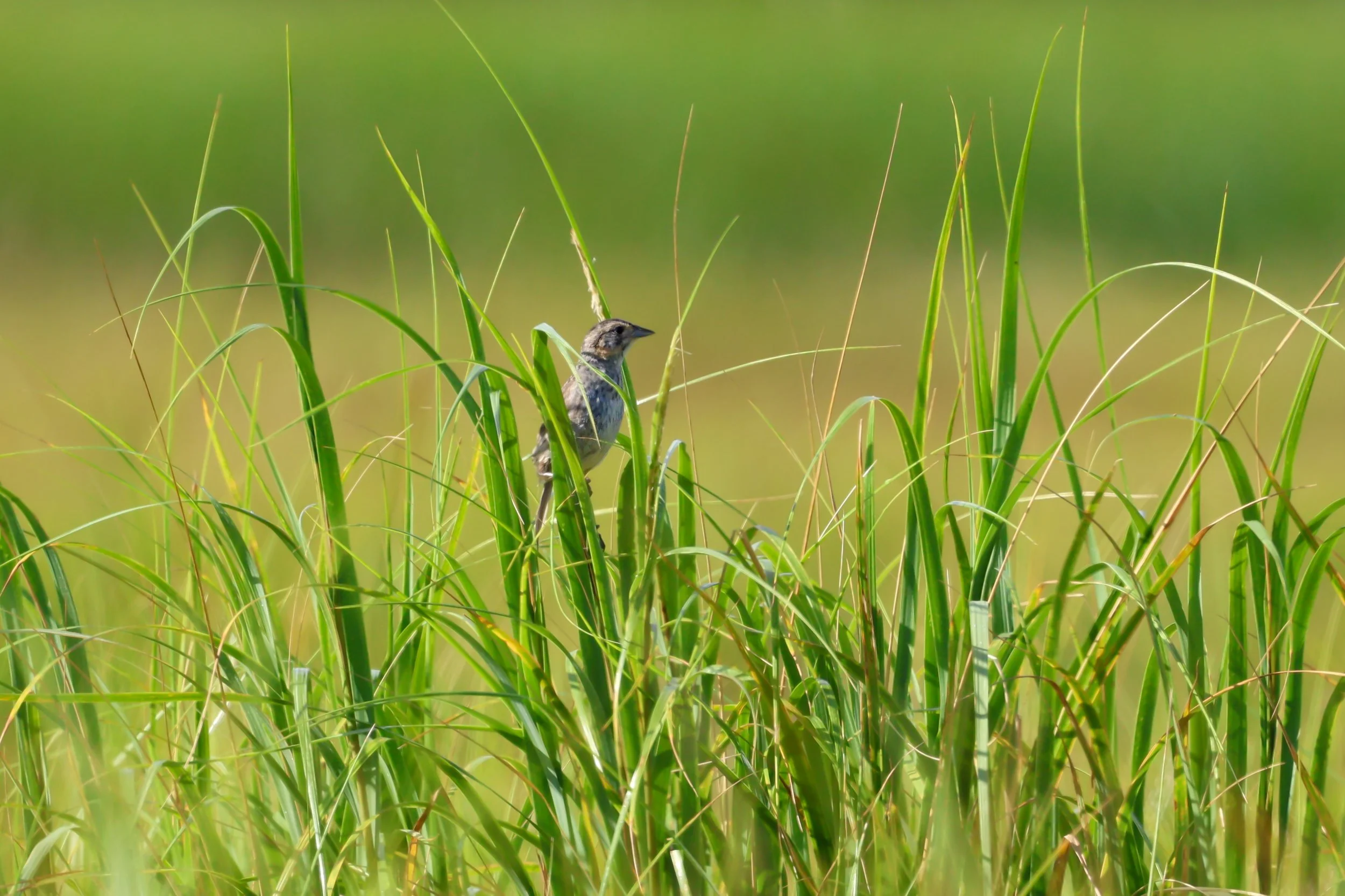
Nelson’s sparrow.
We were able to stand and watch this bird sing its little heart out for a few minutes, which was quite a treat. These sparrows are often hidden deep in the grass or constantly flying deeper into the marsh, making them a very difficult bird to observe most of the time. I was grateful for the bird singing in the bright morning sun, allowing me to snap a couple of pictures before it flew off. Reenergized by this sighting, we continued onto our next site.
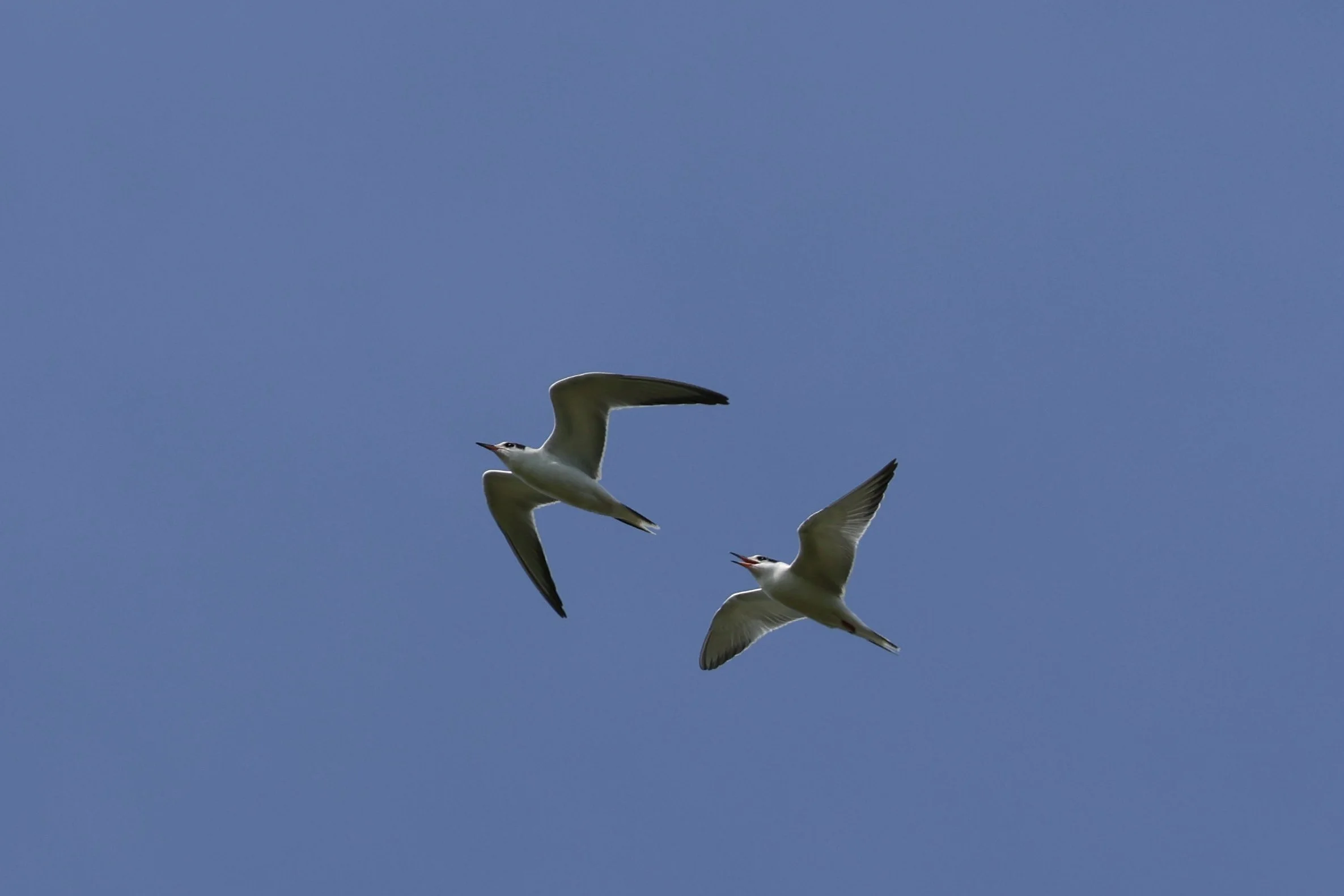
Immature common terns flying across the marsh
Sites three and four did not deliver any of our target birds but allowed us to add some new species to our list, the Eastern bluebird and a pair of immature terns flying across the marsh. After finishing at site four, it was time to get to our fifth site. The journey to the fifth site would be our longest of the day. We had to cut through a forest to get there and the forest was filled with ferns that stood as tall as we did. There was a shared feeling between all of us that it felt like we were transported back in time to the cretaceous period.
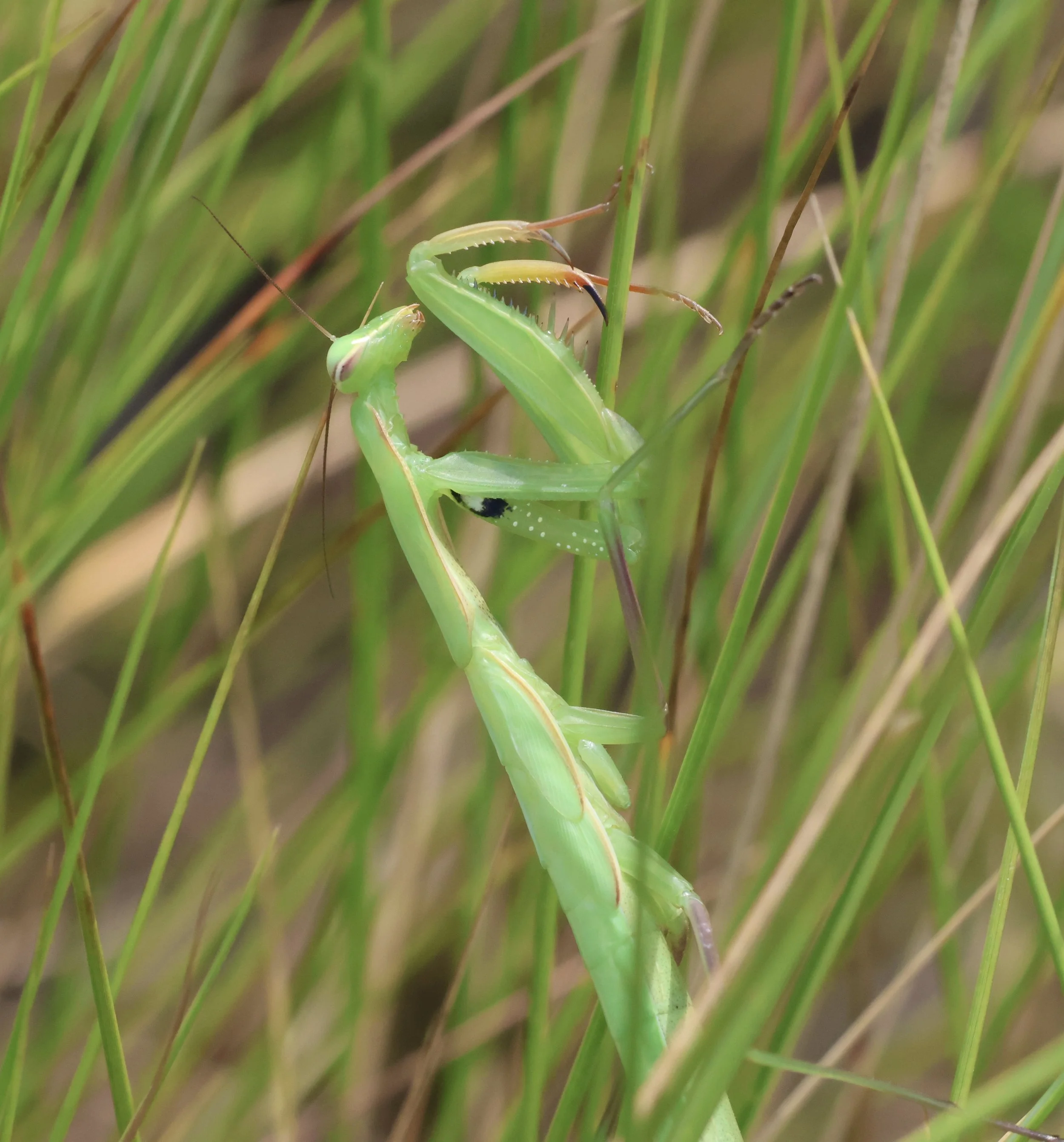
Praying mantis slowly moving through the marsh
We finally arrived at site five and found it was even quieter than the previous sites. It was starting to get later in the day and the sun was definitely getting hotter, so I can’t say I blame the birds for not being quite as active. As we trekked to our final site, we were really starting to feel the heat. Being layered up in July, no matter where you are, isn't always easy but being out in the middle of a marsh with the sun bearing down on us, definitely made it a more challenging journey. As we continued our walk, we could even see the heat haze over the marsh. Finally, we arrived at our last site and we’re rewarded instantly by listening to multiple Nelson’s sparrows. We believed we recorded three Nelson’s sparrows at this site, which we were pretty excited about. It felt pretty likely that we had actually come close to a nesting site, based on how frequently they were calling and how consistently they were landing at a specific location. We went through the same protocols as before, and once the recordings ended, we made sure to pack up quickly and head to the shade of the forest for some relief from the heat.
Even though we didn’t find any of the three major target species, I was pretty satisfied with the data we had collected. Finding numerous Nelson’s sparrows felt like an achievement and I always appreciate spending time in a habitat that feels as remote and wild as a marsh does. The data we collected will be important for the SHARP study and even future restoration efforts at Swett marsh as well. We plan on conducting this study again next year and we are incredibly grateful for our network of volunteers like Jane and Jeff, who are willing to tough out these tough conditions in the pursuit of conservation.
If you want to read more about the broader study, here you go! https://www.tidalmarshbirds.org/
If you got the itch for birding and want to volunteer to do some community science focused monitoring work on your own schedule, please check out our page here: https://www.kennebecestuary.org/bird-monitoring.
Stay tuned for future bird walks hosted by KELT!