
Native Plant Spotlights
Here in the Kennebec Estuary we have an incredible amount of plant diversity. The biodiversity of the Northeast is unrivaled by the rest of the country, this speaks to the history of the place. Plants tell us the story of the land we are on, they are completely honest about who they are and where they come from. Reliable and trustworthy.
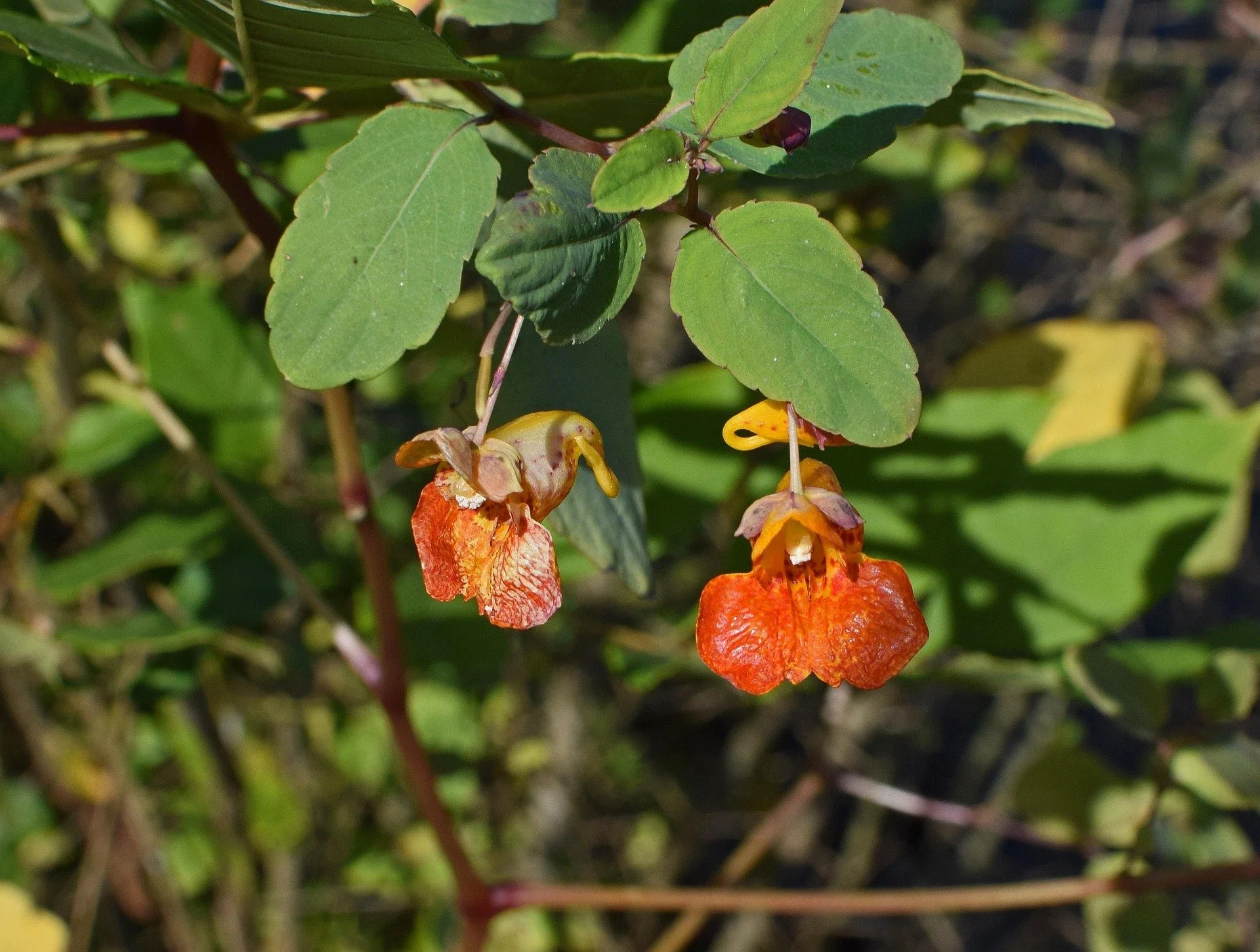
Impatiens capensis Spotted Jewelweed
Hidden in the wetland grows an unexpectedly interesting plant, spotted jewelweed. The scientific name for this plant is Impatiens capensis. Jewelweed, also known as spotted touch-me-not, has a few secrets hidden in its branches. The seeds disperse through what we call “explosive” or "ballistic" dispersal. Inside its seed pods there is a built-in spring mechanism that when disturbed expands and launches the seeds far away from the parent plant. This ensures that the genetic material of the jewelweed is spread out throughout an area. Another secret jewelweed keeps is its medicinal properties. Commonly found growing by the infamous poison ivy, jewelweed has evolved to be a natural antidote to its blistering oils. The natural saponins and lawsone found in jewelweed combat the urushiol, which is the irritating compound found in poison ivy. Lawsone is a competitor with urushiol when it's trying to bind with skin cells to cause a reaction, this effectively stops the ability of the harmful oil to even make contact with your skin cells. The second compound, saponin, is a natural soap that washes away the urushiol making it ineffective.
Alongside the trail, low to the ground, mats of evergreen leaves peak out from underneath the larger shrubs and vegetation. Two particular plants catch my eye: wintergreen and partridgeberry. Wintergreen is a small plant growing up to five inches in height. It has alternately arranged glossy paddle-like leaves coming directly from the stem. Its dark green leaves are met with a cherry red pop in the center as they meet the stem. They flower in mid summer and appear as small white bells from the center of the plant. The berries of wintergreen are bright red and are often found underneath the leaves. Wintergreen certainly lives up to its name as when you break the leaves the sweet smell of mint is released into the air. This plant is completely edible, the berries taste minty fresh and the leaves can be brewed into a comforting tea. Alongside wintergreen another low growing plant occurs, partridgeberry. You can identify partridgeberry by looking for almost vine-like growth habits across the ground of small ovate leaves that feature a distinct white mid-vein. When partridgeberry flowers it puts out two white flowers that are fused at the base. When these flowers are fertilized and start to turn into berries they fuse together forming just one berry from the two flowers. You can identify these berries and distinguish them from wintergreen by looking for two eyes on the top of each berry. While these berries are edible they are nothing to write home about, as opposed to their spicy counterparts.
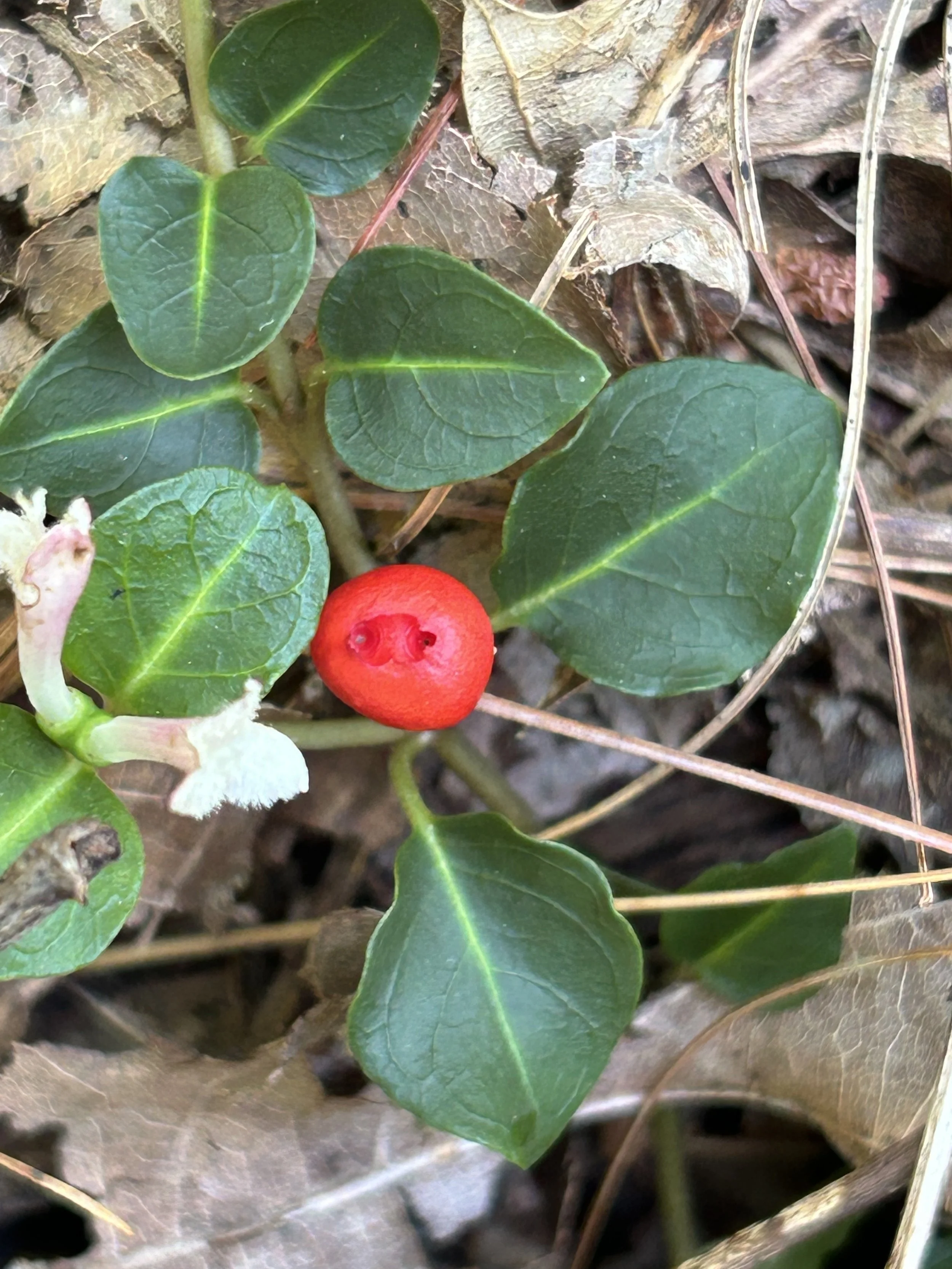
Michella repens Partridgeberry
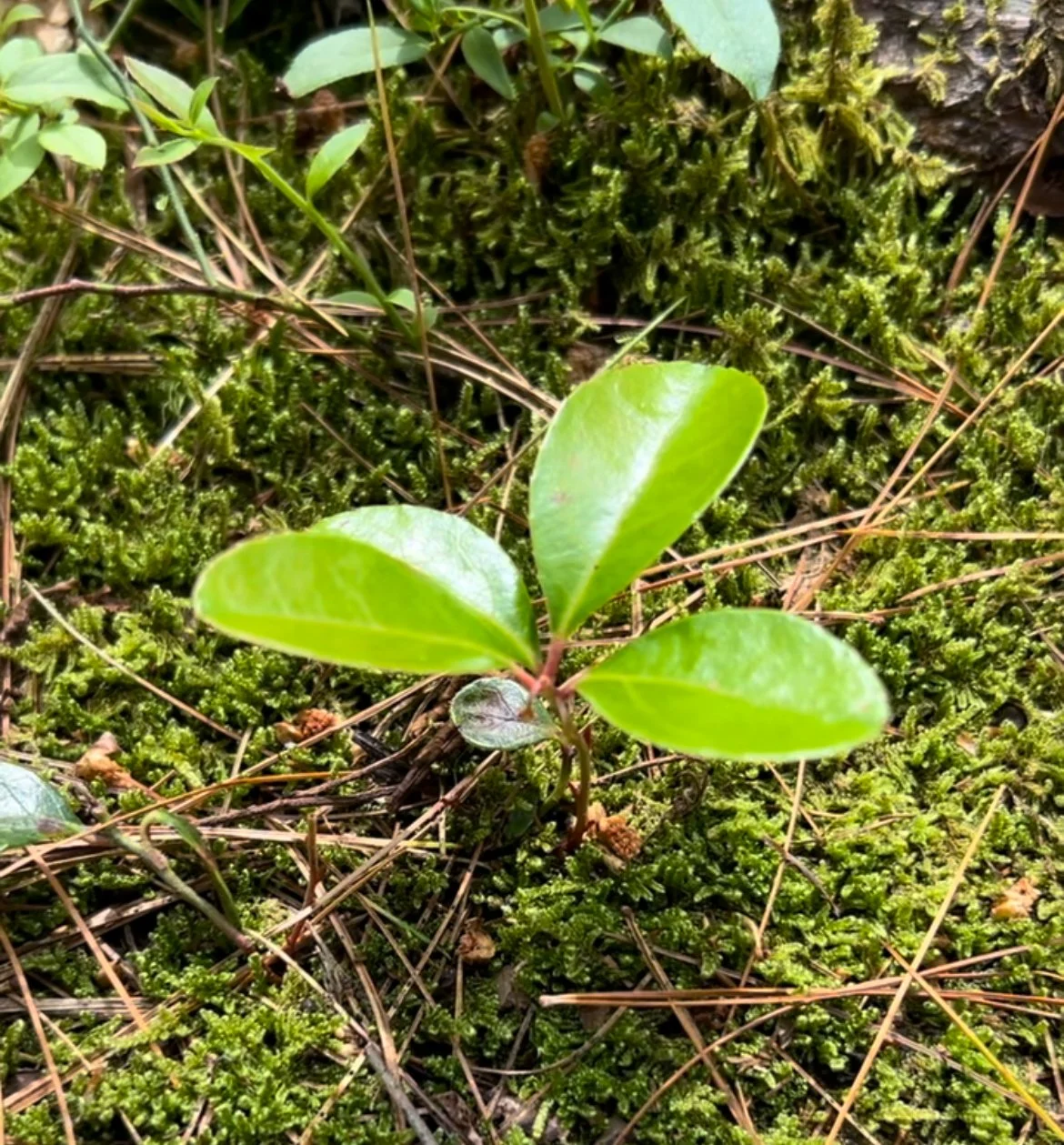
Gaultheria procumbens Wintergreen
Oftentimes we find ourselves looking up when hiking through the forest admiring the towering pines, in awe of the glittering birches. However, “up” isn’t the only place where you can observe the wonderful growth pattern of trees. Every once in a while in a shaded pine heavy area you come across club mosses. Specifically the flat branched tree club moss. This plant reaches heights of about seven inches and largely resembles the tall pines. Kind of like nature's bonsai. But these unassuming plants represent something much more than the green blur we get when looking from a birds eye view, they are a window through evolutionary history. Club mosses were around before any of the flowering plants we know today. They reproduce not through pollination and fruiting but through the dispersal of spores. These spores find their way to soft and moist places under leaf litter and begin their lifecycle anew. Club mosses exist in a group of plants that are in-between mosses and flowering plants. They are vascular, meaning they have true leaves and xylem and phloem, which differs from their cousins the mosses. When they reach maturity and begin to send up their spore stalks you can observe a small yellow spike directly from the top of the club moss. Since these plants do not reproduce by seed they need another way to protect their spores as they send them into the world. They coat their spores in a waxy, oily substance that traps moisture in so the spore can be safely delivered to its nursery. It is because of this waxy coating that, when dried, the spore stalks become extremely flammable and can be a source of a very reliable fire starter!
A fan favorite and a personal bucket list plant for me is the pink lady’s slipper orchid. Although considered rare in most of its native range, the lady slipper is surprisingly abundant here in the Midcoast. I’ve become almost desensitized to the pop of color through the brush as I hike past a patch of orchids. The pink lady’s slipper is unique in the orchid world because it roots in the ground. Now this may not seem very impressive as the majority of plants do this, but in the world of orchids this is a miraculous feat. Only about 1% of the world's orchids root in the ground, most other orchids are what we call epiphytes, meaning they attach themselves to surfaces like tree bark, rocks, anything that isn’t soil!
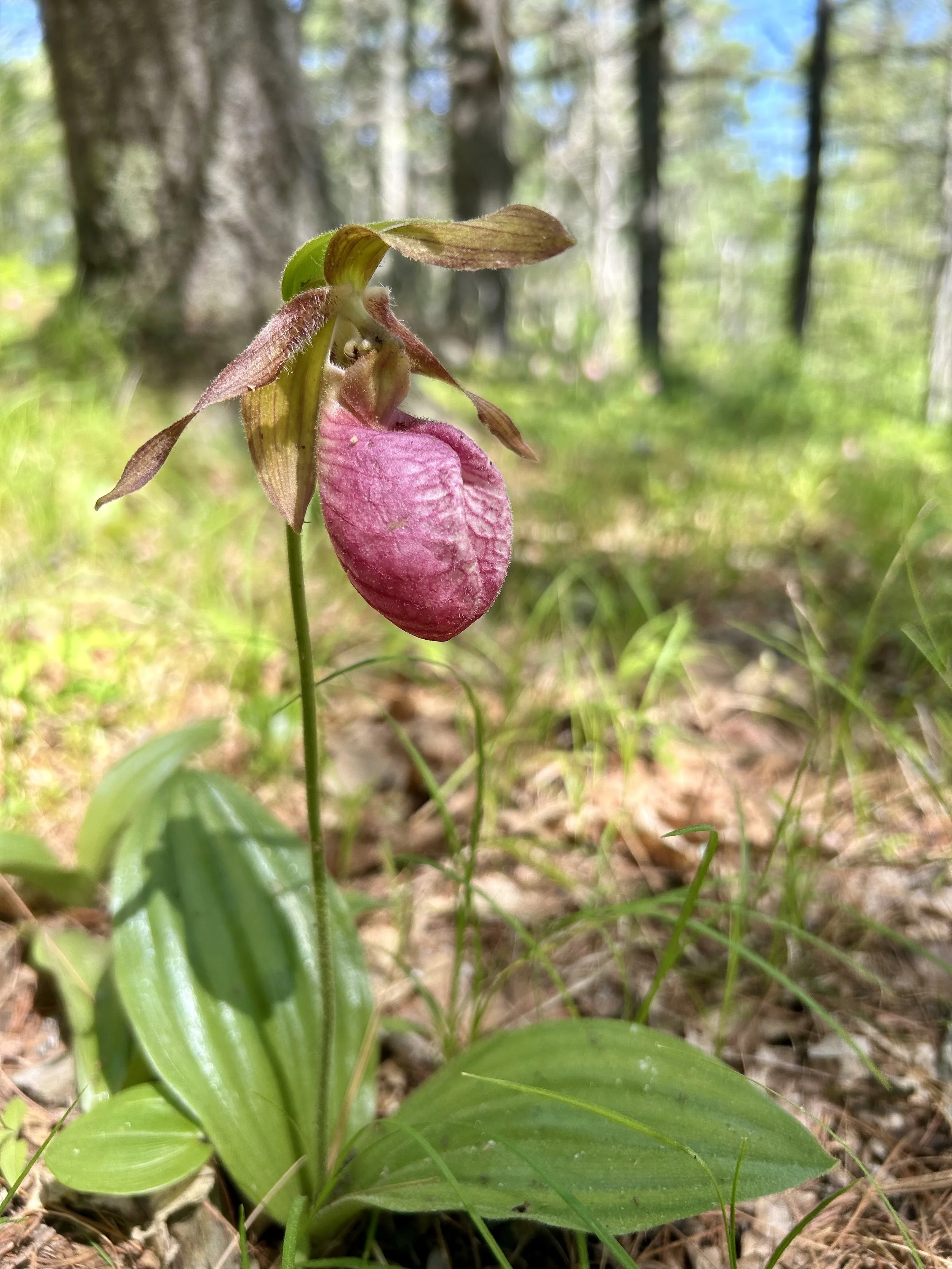
Orchids form intense connections with the fungi around them in order to make up for the lack of nutrient availability in the places they are rooted. Pink lady slippers, being one of the only orchids that have roots in the soil, have a unique connection with mycorrhizal fungi in that they use the fungi as a protector for their seeds. Orchid seeds are so small, almost like a speck of dust, they do not have the protective seed coat that most other seeds have called the endosperm. This makes them light enough to be carried by the wind, but they have no protection or nutrients from the typical endosperm layer. So enter mycorrhizal fungi. When the orchid seed lands in a place suitable for growth if a very specific species of fungi is present it can survive. The fungi grows and surrounds the seed and supplies it with nutrients from the soil, almost acting as an extension of its root network. As the orchid grows it starts to photosynthesize and some of that energy in the form of sugars is returned to the fungi. This is called a symbiotic relationship. Pink lady slippers are threatened because of these very specific habitat conditions and the need for this relationship.
The Midcoast is home to a wonderful array of organisms. From the biggest moose down to the smallest seed there is wonder around every turn. I myself am relatively new to the area and have been blown away by the incredible diversity I have been able to witness. Celebrating the native plants in Maine is such a great joy as they have withstood the test of time and change to get to where they are today. Native plants, while they are amazing, need our help in order to continue existing on our landscapes. The threat of habitat loss, invasives, and a changing climate makes the loss of some of our beloved native plants inevitable. However there are things we can do to change the course of this. By encouraging native plants to grow in our own back and front yards we can individually make a huge impact on the health of the ecosystems around us. It doesn’t seem like much to let a corner of your yard grow wild, but in the grand scheme of things even that little corner can be the link between critical habitats. The domino effect is real when it comes to biodiversity. Conserving wild habitat and rewilding our own spaces has an incredibly positive impact on the health of the planet.