Springtime Programs
What better way to learn than getting your hands dirty in a vernal pool, knee deep on the muddy clam flats, or breaking soil between your fingertips. This past spring KELT was busy with programs focused on getting our local elementary school kids out into the wilderness. We explored a variety of ecosystems such as the mud flats along the coastline, our forests here in Bath, and our LOCAL garden!
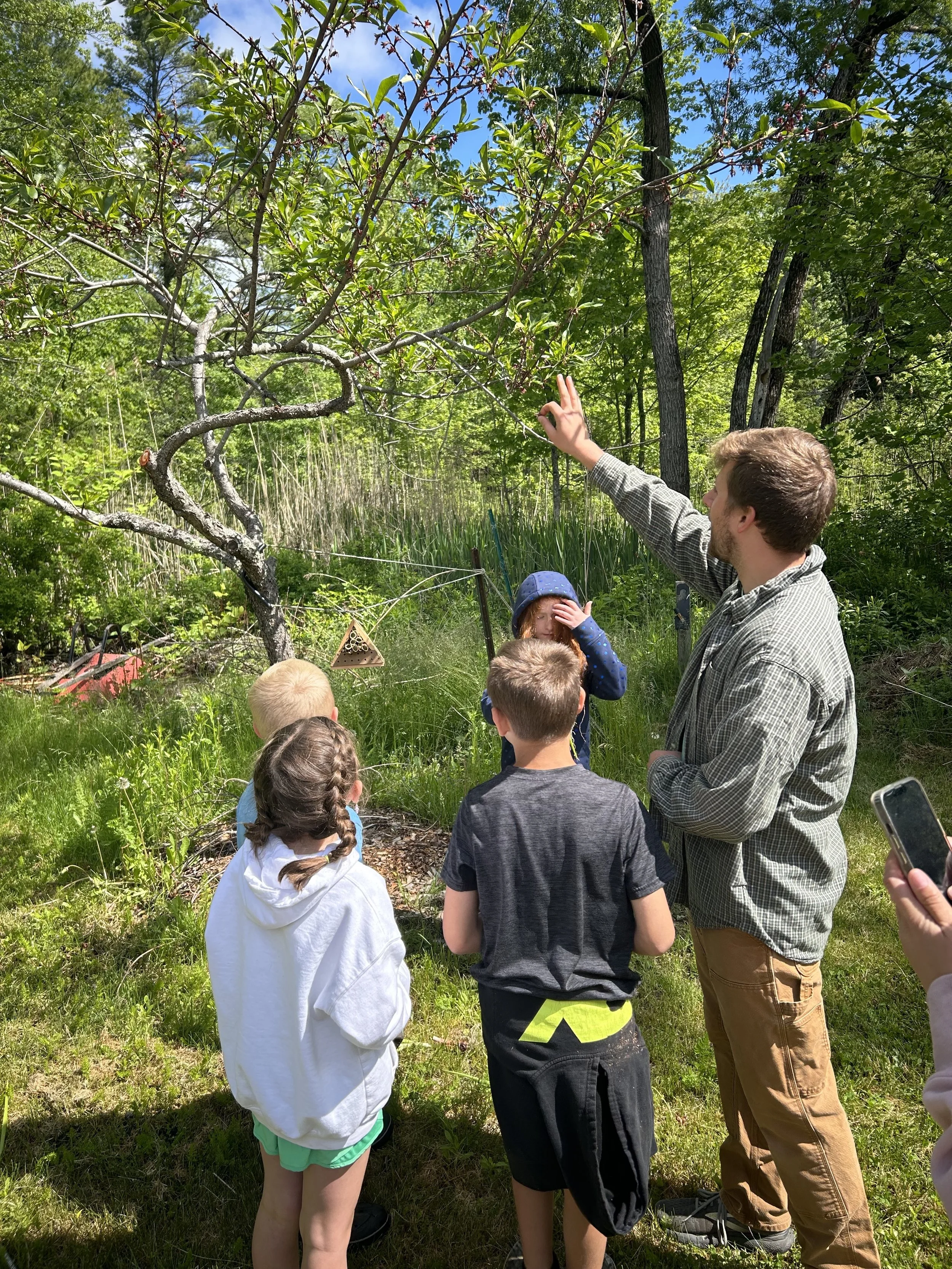
KELT’s LOCAL garden welcomed West Bath School’s second grade students to get hands-on experience with pollinators and their habitats. After they spent time in their classrooms building pollinator watering stations and bee homes the students poked their way through the garden to find the best spots to set them up. Our native pollinators are attracted to sources of water and our local students found a way to help those pollinators along. The watering stations are made of a small pedestal with some nice perches for the pollinators to rest. The bee homes they made featured a small triangular structure packed to the brim with hollow sticks for the bees to nest within. Contrary to the common notion that bees live in large colonies, most of our native bees live a more solitary lifestyle. They make small nests of their own in trees or the ground and spend their days collecting pollen to leave to their offspring.
The LOCAL Garden has been hard at work this spring not only providing educational opportunities, but also producing food for our local Bath community. West Bath’s students were able to experience the feel of a real working garden, and be a part of it’s future. In addition to the pollinator installations, the students planted native perennial wildflowers around the garden. Stop by to see the wildflowers, as well as the students pollinator installations and check to see if any bees have moved in!
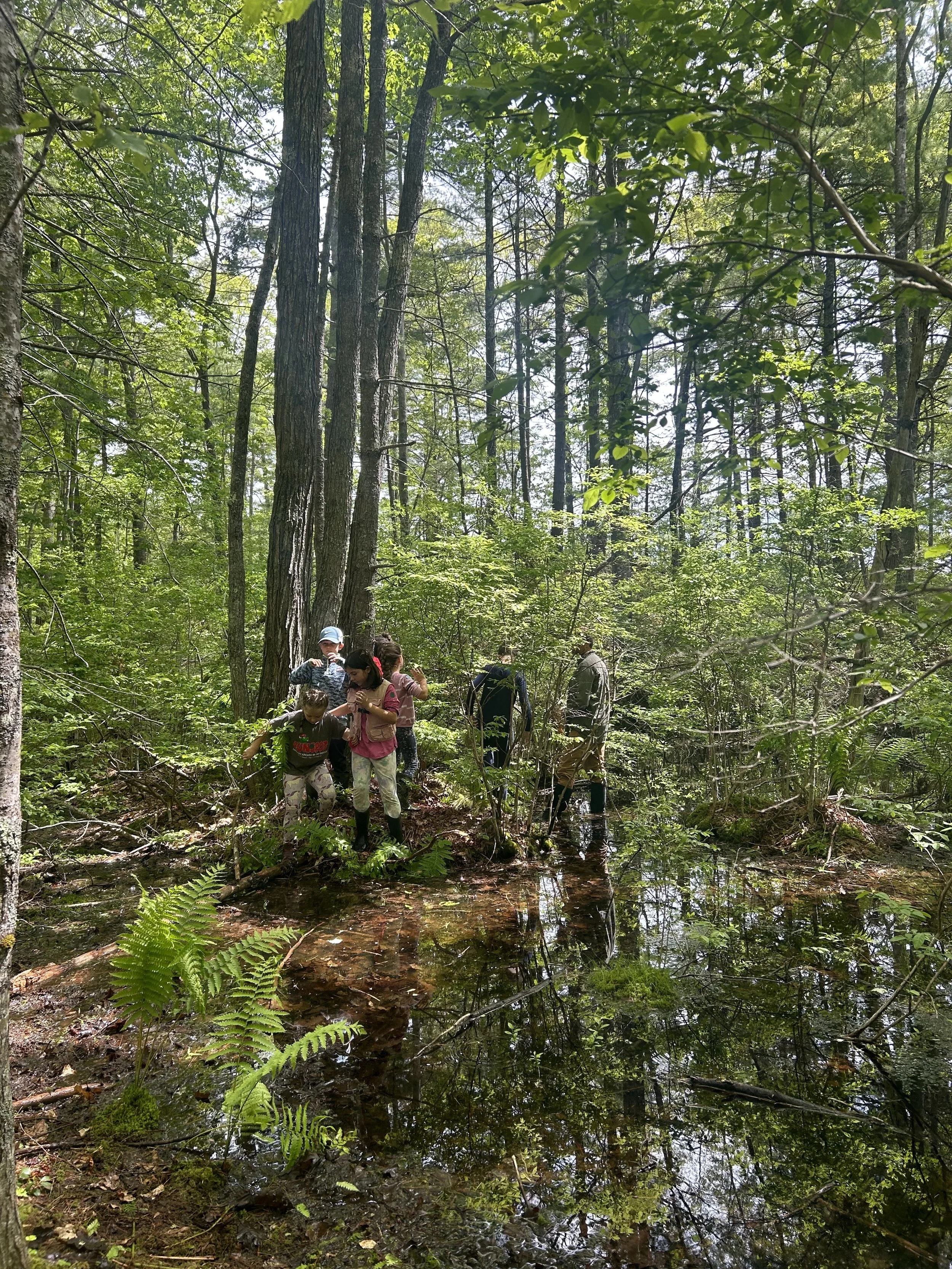
We travelled to Lilly Pond with Phippsburg Elementary’s third grade class, where they explored the wonders of the world beneath the surface of a vernal pool. Inspired by their findings, excitement grew as more and more tadpoles were observed. This particular class was able to build excitement together and found something new around each corner. They learned about the rare pink lady slipper orchid, seemingly not so rare in the woods at Lilly Pond. As we trekked, we uncovered more and more lady slippers peaking through the shrubs and ferns. The students stopped to question the pollination of lady slippers. They learned that the unique bell shaped petal on the bottom of the flowers functions as a sort of trap for bees. The bee enters through one side of the flower and is forced out through the bell and it gets cleverly covered in pollen. This was so fascinating to one student in particular that she excitedly pulled her friends aside to explain the process.
We stopped to explore a hemlock forest at a high point in the trail. Below in the rocks along the roots of the towering trees we searched for evidence of larger animals also using that space. Porcupines are known to love that particular habitat. While we didn’t see any evidence just then of animals we brainstormed reasons why they might like that particular spot. The soft moss lining the rocks seemed to make for a nice place to bed down. The deep crevices between the rocks looked like a good spot to hide from predators. There seemed to be plenty of food in the forms of berries and in the porcupine's case the sweet new growth of the eastern hemlock.
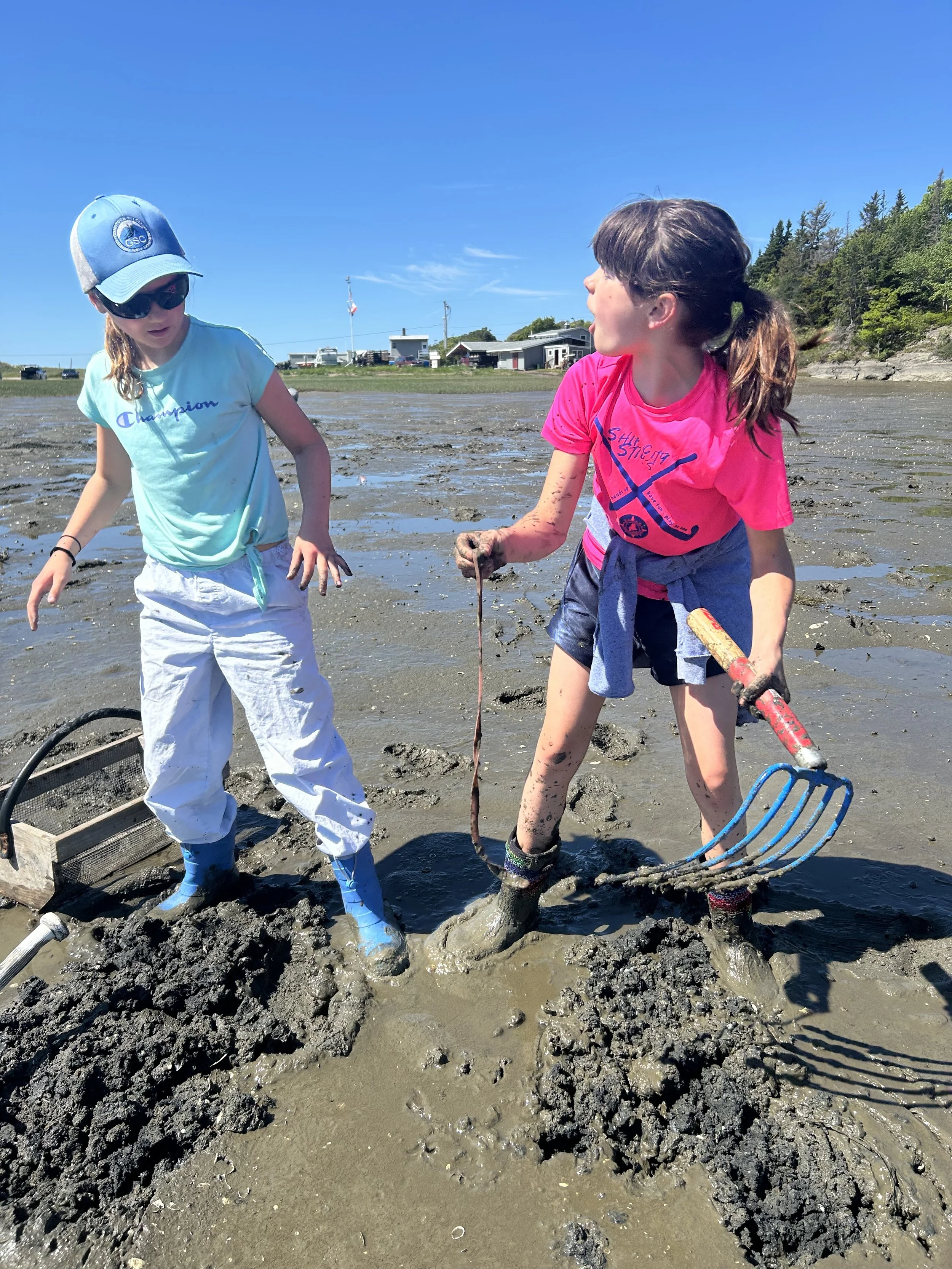
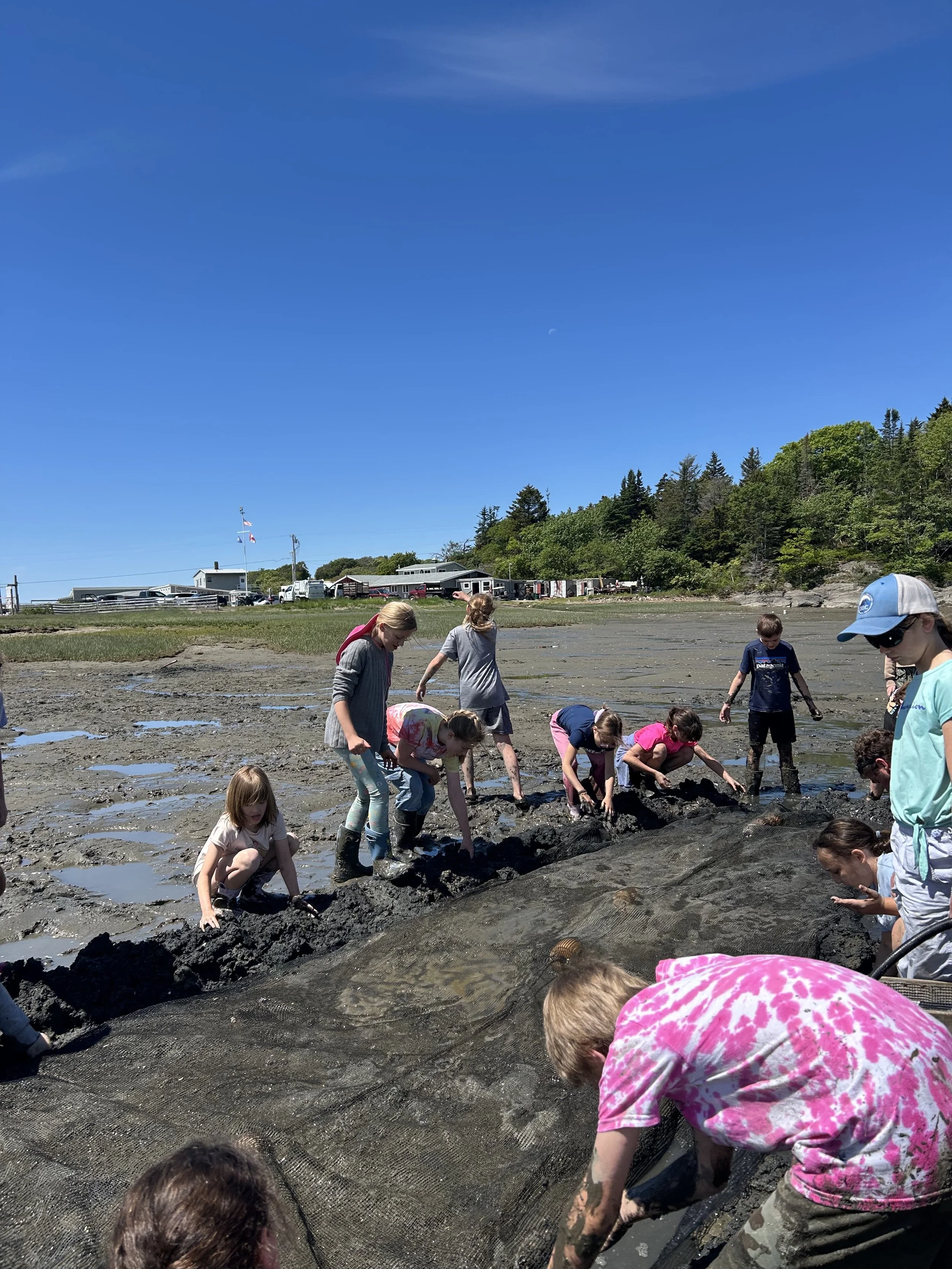
A childhood spent knee deep in mud is a childhood well spent. Phippsburg Elementary’s fourth grade class was a joyful example of that carefree spirit. In fact the deeper into the mud we got the more we learned about the environment that clams are able to survive and thrive in. We ran into other creatures such as 20 inch long blood worms and the tiniest of hermit crabs occupying the pools above. The blood worm was a class favorite as it made the rounds, met with squeals of excitement and giddiness. We were guided through our clamming day by local experts Terry Watson and David Gray. Katherine Cart from the Island Institute also joined us for this program. The students learned the art of clam digging and how to be the most efficient while digging. While clam digging takes years of practice to perfect, our experts were able to guide the students to success.
Digging was only the beginning of our clamming exploration. We ended the day with a conversation and activity about the conservation of Maine’s clams. The students learned that there are ways in which we can help our local clams to produce more and survive the changing conditions of our climate. Research has shown that soft-shelled clam populations are in decline along Maine’s coastline. The main drivers of this decline are over harvesting and invasive green crab predation (Risley et al., 2025). Through the students’ classroom sessions they learned about these threats to clam populations, and on the mud flats they got to do something about it. We spread out a large rectangular net across a section of the mud flat and trenched out the side around it, being careful to collect the small clams we came across and place them underneath the net. After the four sides around the net were dug out we buried the net into the trenches so that it stretched out protecting that area of the mud flat. The net will stay in place moving up and down with the tides for the duration of the season. This will protect the young clams and allow them to mature into adult clams at a higher rate then if they were exposed.
Discovery is endless through fresh eyes. KELT’s continued effort to connect the next generation to the natural world is evident through the variety of programs that we offer to our local educators. Stay on the lookout for public programming if you want to get involved with KELT and keep your ears open to hear more about our upcoming school year programs!
Sources:
Risley, S.C., Britsch, M.L., Stoll, J.S. et al. Mapping local knowledge supports science and stewardship. Ambio 54, 1648–1665 (2025). https://doi.org/10.1007/s13280-025-02170-4