
A Walk in the Marsh with Maine Natural Areas Program
On Tuesday, June 30th, KELT staff and Summer Stewards had the absolute pleasure of joining with Eric Doucette, Maine State Botanist and his assistant, Rachel Warm, Field Ecology Intern, both from the Maine Natural Areas Program for a leisurely walk out at Center Point Preserve. Our goal? Become more familiar with the interesting freshwater tidal plants that call this part of Merrymeeting Bay home.
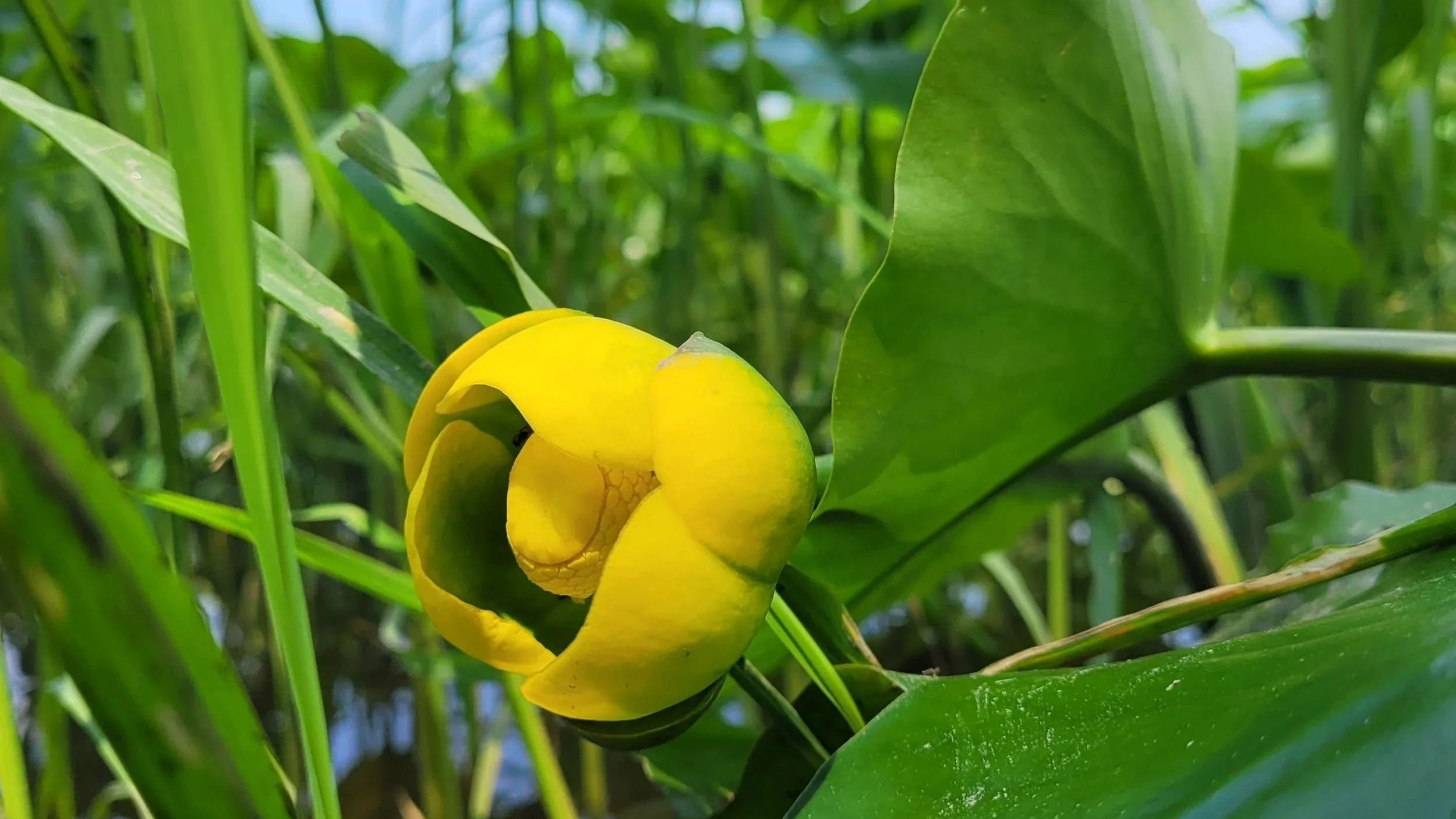
Nuphar advena - Yellow Pond-lily
With our plant identification guides, we gathered along the coast of the freshwater tidal riverine estuary, ready to hone our plant ID skills. We stepped into the marsh with the tide just low enough to explore shoreline vegetation. Right away, Eric began testing the waters of our current knowledge and familiarity of botanical terminology. With eleven of us in the group, we were able to keep up, take notes, and ask questions when necessary.
The first plants we learned to identify were Juncus acuminatus (tapertip rush) and the neighboring Schoenoplectus (bulrush). Each plant gave us the opportunity to key out their distinguishing characteristics. For Schoenoplectus, we noted its triangular stem with concave sides, along with its lateral sessile inflorescence (i.e. flowers that grow in clusters off of a plants main stem), all key features that aid in its identification.
We continued down the shoreline finding some of what makes this area so special. Plants such as Sagittaria graminea (grassy arrowhead) and Sium suave (water parsnip) change their morphology based on tidal location! When Sium suave leaves are emersed or are just above water, it will have the characteristics of a central axis with well defined leaflets. When near lower tidelines and submersed for longer, the water parsnip will attempt to increase the surface area of its leaves by making them more lacy. This is to gain more cellular respiration in deeper water. In other words: when the plant is exposed to wetter conditions for longer periods, its leaves will grown frillier to allow it to survive! Amazingly, this type of activity does not occur inland or in lakes and ponds where these plants are also found. This only occurs in fresh water with tidal influence.
Seemingly the opposite happens with Sagittaria germania! We see a change in leaf structure along the entire tide line but specifically and most perplexingly, along the higher tide line. Here, a basal rosette (i.e. a circular pattern of leaves hugging the base of a stem) will form leaves of a simple oval shape. This botanical feature is not always included in our freshwater plant ID books as many guides do not account for habitats with tidal possibility.
Rather than giving us all the answers, Eric wanted us to build a mental identification key before reaching for our books. “Doing this will help you organize the biological complexity of any group of organisms” Eric remarked.
Here was our recommended process… Before opening your book, in your mind how much can you answer before keying?
What's the leaf arrangement, leaf type, simple or compound, edge entire or serrated?
What's the inflorescence type? Is it a solitary flower or raceme? How many petals?
Stem cross sectional shape? Oval? Triangular? What is its texture?
As we started broadly and then narrowed in on our observations, the KELT team built a stronger foundation of identification before consulting the keys in our guide books.
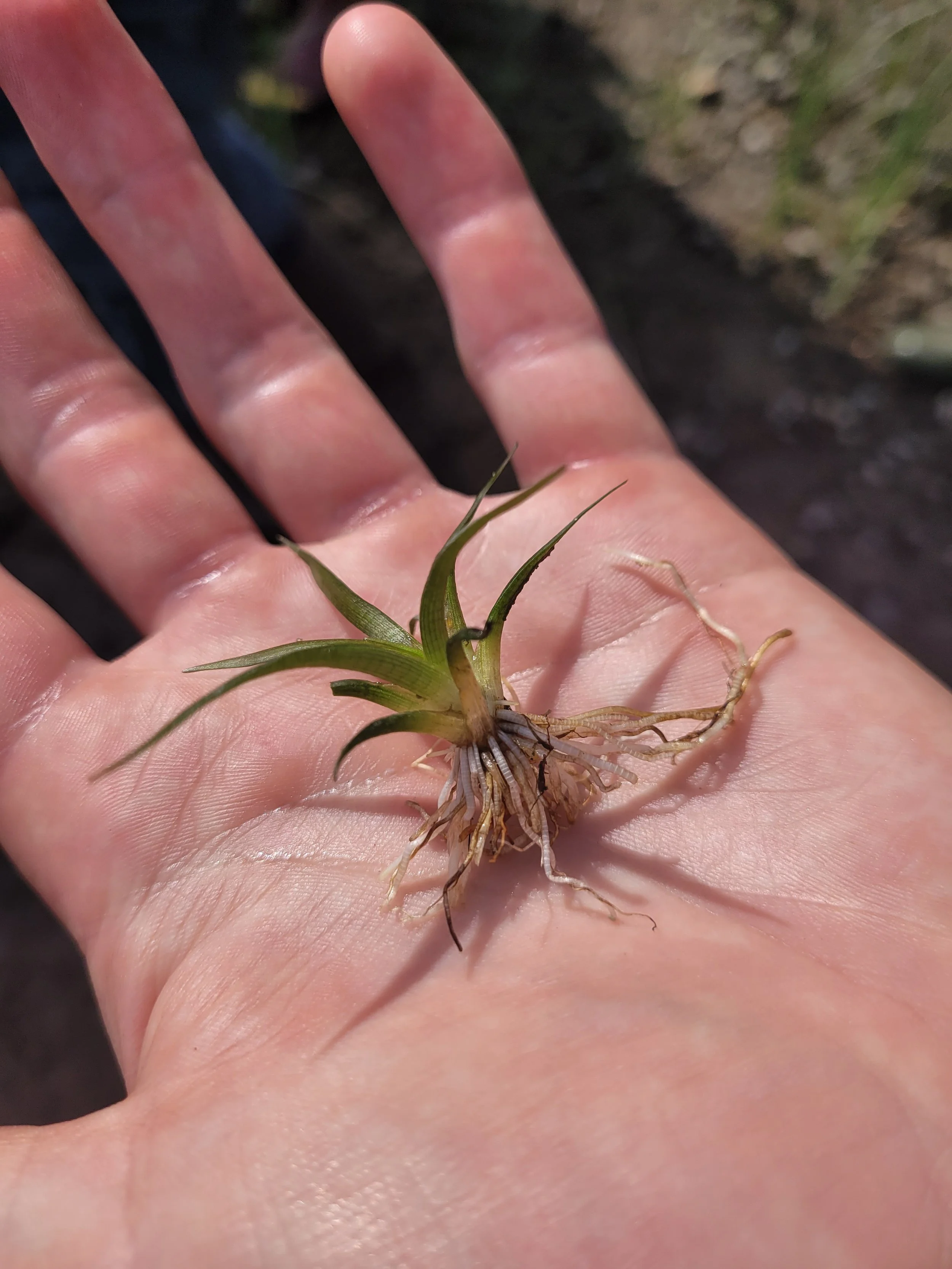
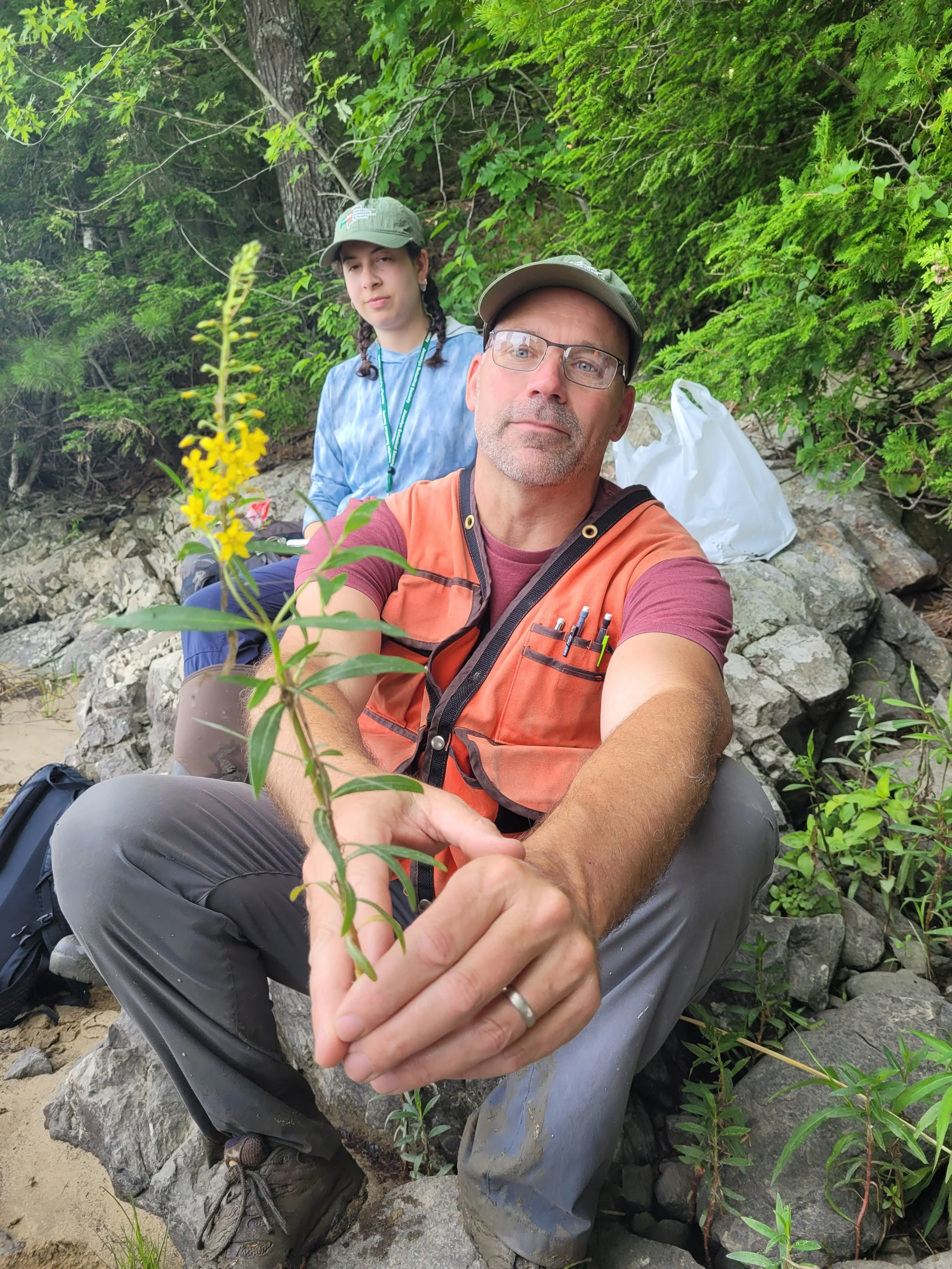
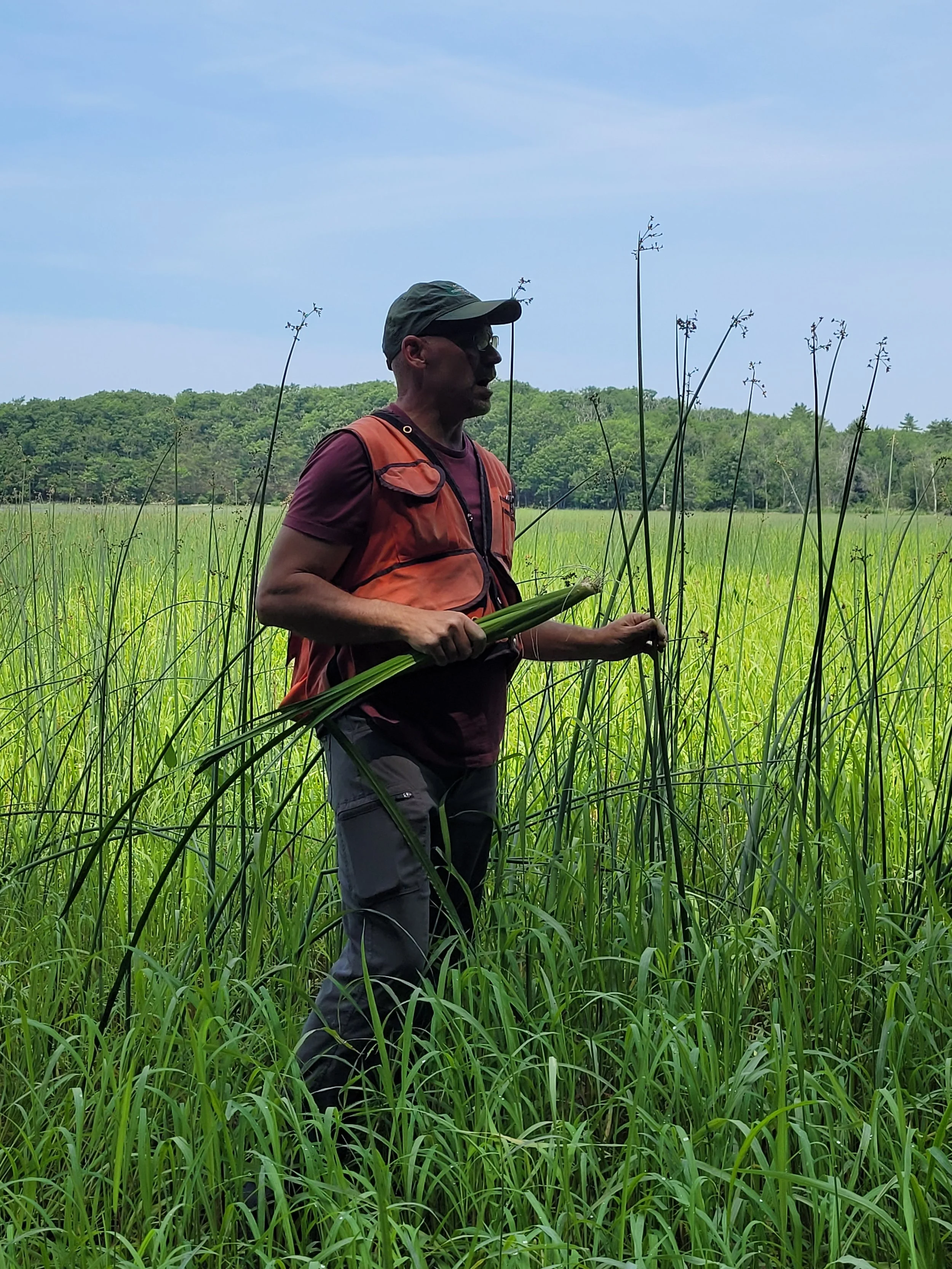
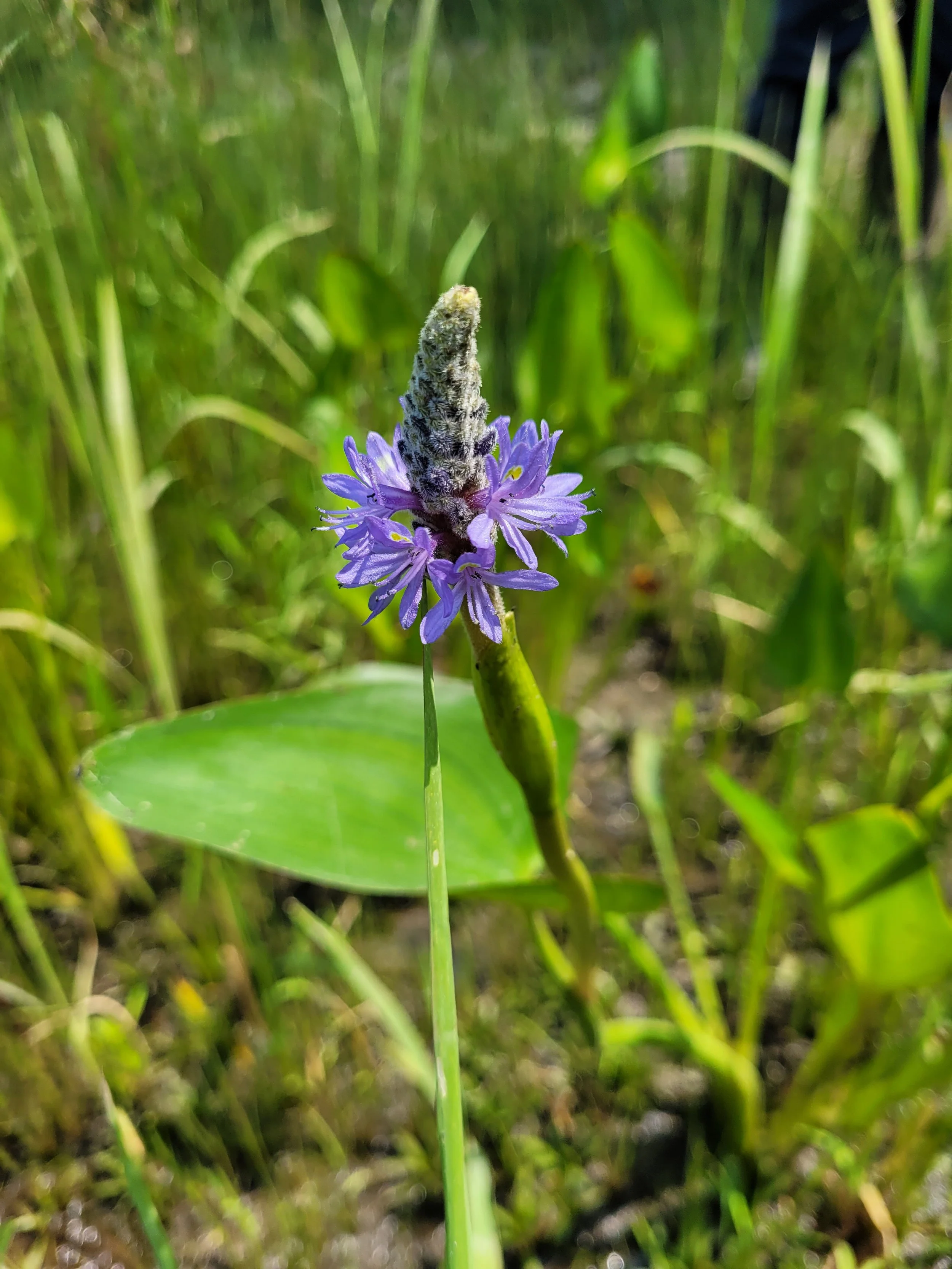
Still hunting for answers after completing our initial observations, again Eric wasn’t just going to hand us the answers! Instead, he encouraged us to work through the keys ourselves. If we encountered unfamiliar terminology, he suggested trying both possible interpretations. Eventually we realized one pathway to the plant name felt really wrong, and this exploration steered us toward the right identification. A thoughtful practice that helps when understanding how to interpret terminology within our guide books.
As we followed our path back up the shoreline, I turned back to my notebook and plant sketches, practicing seeing which plants we found along the way and becoming more familiar with this shoreline.
Want to explore the unique plant world of freshwater tidal marshes too?
Center Point Preserve in Bowdoinham is open dawn to dusk, year round, and we welcome visitors to walk its trails to observe habitats, plants, and wildlife - no matter your experience level!
Really want to nerd out? Check out to the resource list below to explore KELT staff picks for guides and resources.