Budding Naturalists
New to this school year, KELT is starting a relationship with Georgetown Central School where KELT will deliver monthly outdoor learning programs with Pre-k through 2nd graders. Each program will be unique from the last but ultimately the goal of these programs is to get students outside and find wonder and enjoyment in the natural world.
November’s program was nicknamed “Budding Naturalists”. We had a mission to take students back in time, before cameras, cellphones, and computers ever existed. The lesson started by talking about what a naturalist is and trying to imagine being a naturalist in a world without technology. What would a naturalist do to record this special tree they came across in the middle of the woods? They might take notes, they might draw it, they may even paint it! And those were just some of the methods these young students were going to practice today to become naturalists themselves.
The class took a walk over to the tree line, admiring all the different species along their school grounds. We talked about how large these trees were and asked how a naturalist may take a sample of these trees back with them? The answer was right underneath our feet. Each student was given the task of trying to collect a couple of leaves each, trying to find unique leaves that were nicely intact.
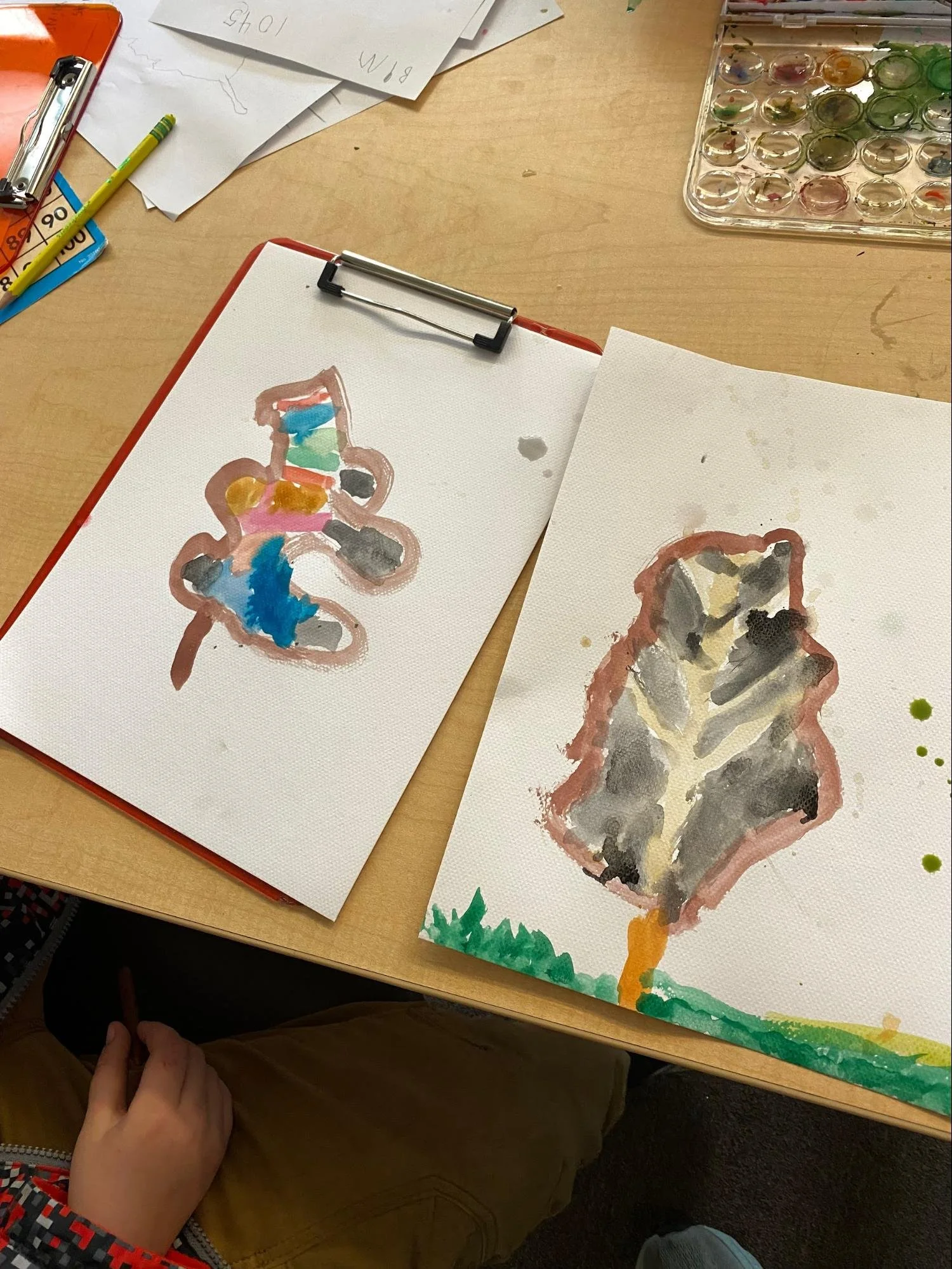
Now our final method of the day was going to be a watercolor painting. An important part of being a naturalist is having an appreciation for the beauty of nature and what better way to appreciate it than to paint it. There was a lot more freedom of artistic expression when it came to painting. Students were first asked to try to paint their leaf as accurately as possible but after they gave their best field guide version, they were free to paint their leaf in whatever way they wanted. We ended up with all different types of leaves, rainbow leaves, some as large as trees, some with beautiful patterns you may see on an insect or a reptile.
Once we had all of our different works of art, we talked about what notes a naturalist may have taken. Students were challenged to think about what may be important to write down. Answers that came to mind were the date, the time, the location, their names, and even what the weather was like.
This program had a goal of allowing these students to take a look at nature through a closer lens. These young students will one day be the future stewards of the natural world and understanding all the different flora and fauna they see is one step of many in their journey.
This program is only made possible by our generous donors and supporters, who see the value in educating and uplifting the next generation of budding conservationists. In accordance with our Strategic Plan, we seek to continue to provide similar opportunities for students across our service region.
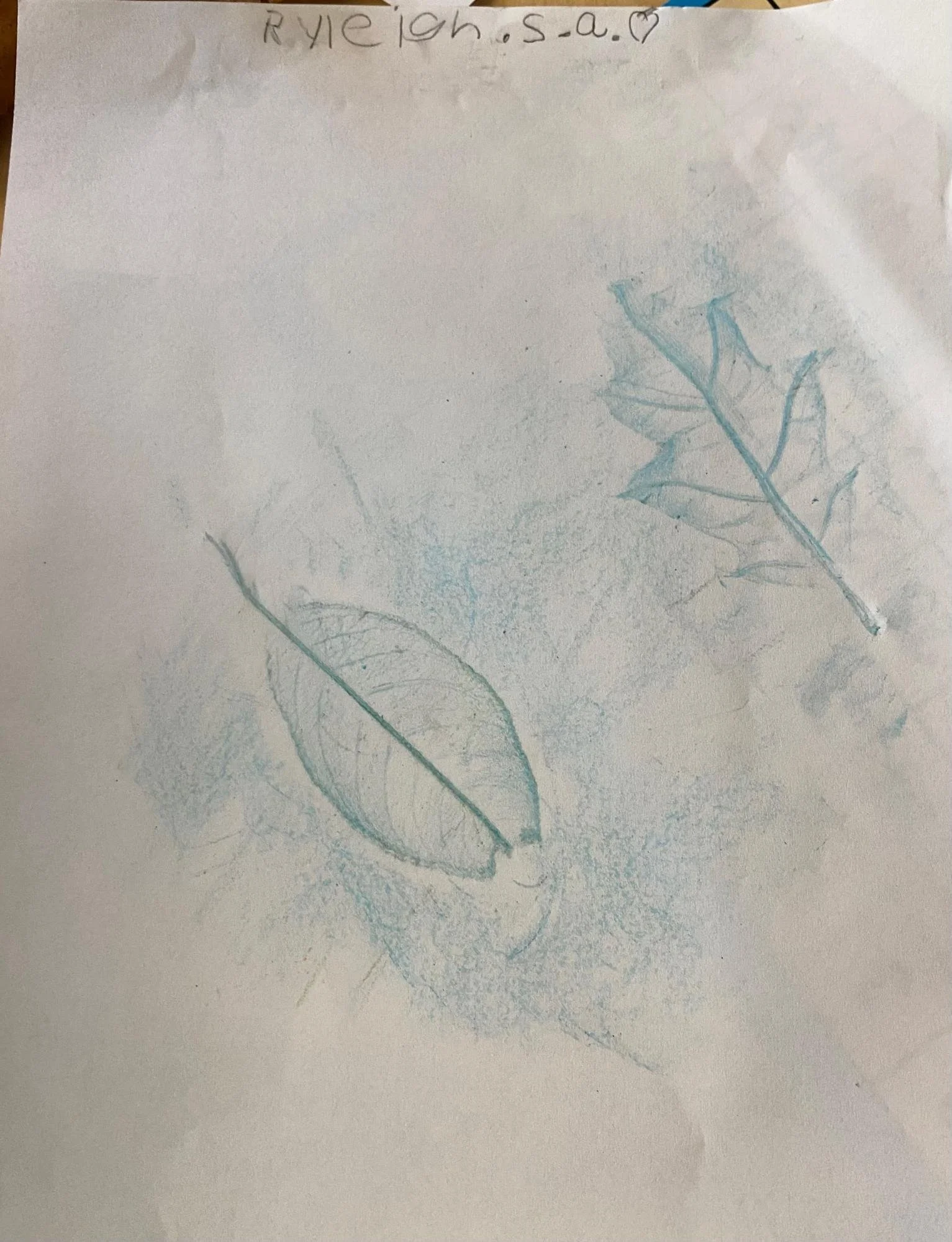
Now that the leaves were collected, it was time to try a few different styles of recording nature. The first one we tried was leaf rubbing. It’s a fun technique that can be done with all ages. All you need is a piece of paper and a bare crayon. The students watched in amazement as their leaf came to life the longer they rubbed it against the paper that was hiding their leaf beneath it. Leaf rubbing was able to highlight small details like the veins of the leaf or the tiny toothed edges that you may not notice at first glance.
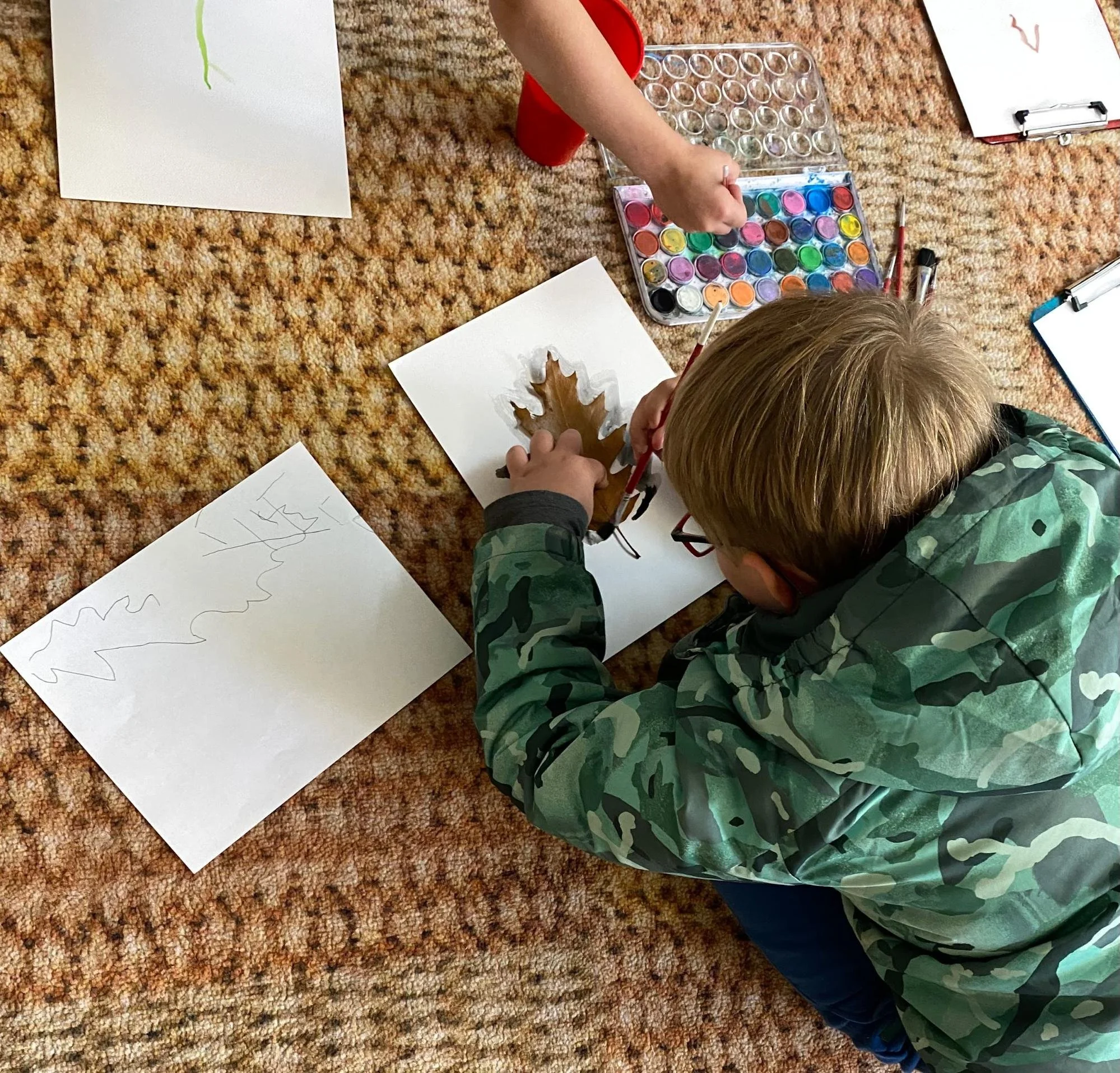
After leaf rubbing, we decided to challenge ourselves with blind contour drawing. A tree is an easy subject but what happens when you come across a bird or a squirrel that doesn’t like to sit still for you? The students had to place their leaf out of view of their paper and without looking at their paper, try to draw the leaf. We practiced drawing our leaves blind a few times, allowing the students to really focus on the shape. Frustration then turned into enjoyment, as the more they practiced, the more accurate their sketches got. After our blind contour drawing, it was time to reward them with an easier style. We practiced tracing our leaves, allowing us to really focus on every edge and curve of the leaf. Students really did a great job of creating a precise outline of their leaves.