
Mitigating a Potential Monoculture
Co-authored by Lindsey Smith, Summer Preserves Steward
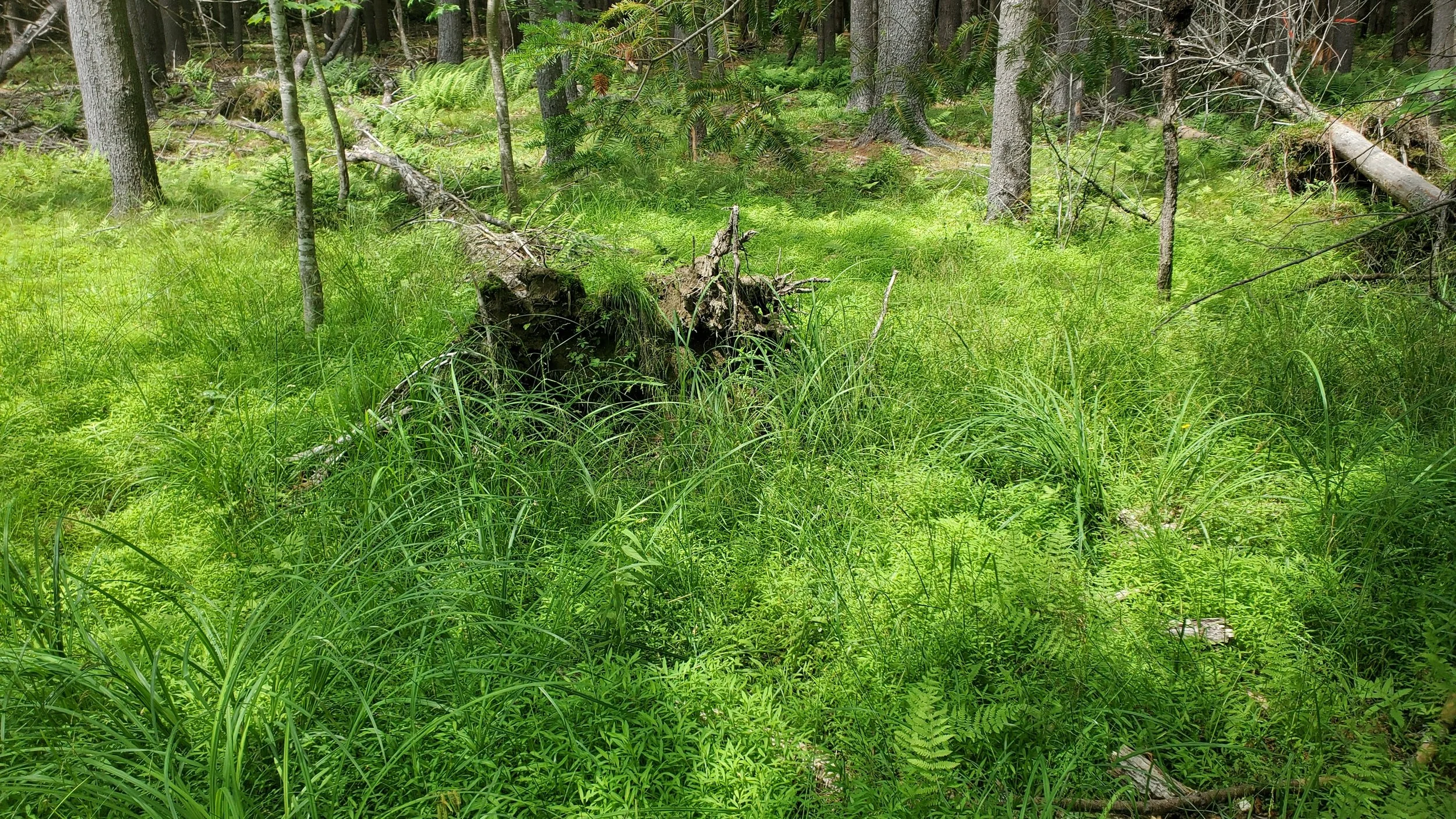
Stiltgrass Management
Learning to identify invasive plants unlocks a new lens through which to view and interact with the outdoors. Whether driving up Route 1 or walking along a trail, this lens can be a crucial tool to help protect KELT’s unique ecological area. With this tool equipped, KELT’s team has set to work combating the rise of a relatively new invasive species in Maine, Japanese stiltgrass.
Japanese stiltgrass (Microstegium vimineum) is a low-growing annual grass that thrives in the same shaded, moist ground that much of our region's woodlands rely on. It is highly adaptable, flourishes in disturbed soils, and is able to grow in both wetlands and forest understories. It spreads rapidly and leaves little to no space or resources for native vegetation to survive.
Stiltgrass is an allelopathic plant, meaning it releases compounds into the soil that inhibit the growth of native plants. When dried or dead plants form a thatch layer, stiltgrass makes it difficult for native trees, shrubs, and wildflowers to establish and grow and it can also become a huge wildfire risk.
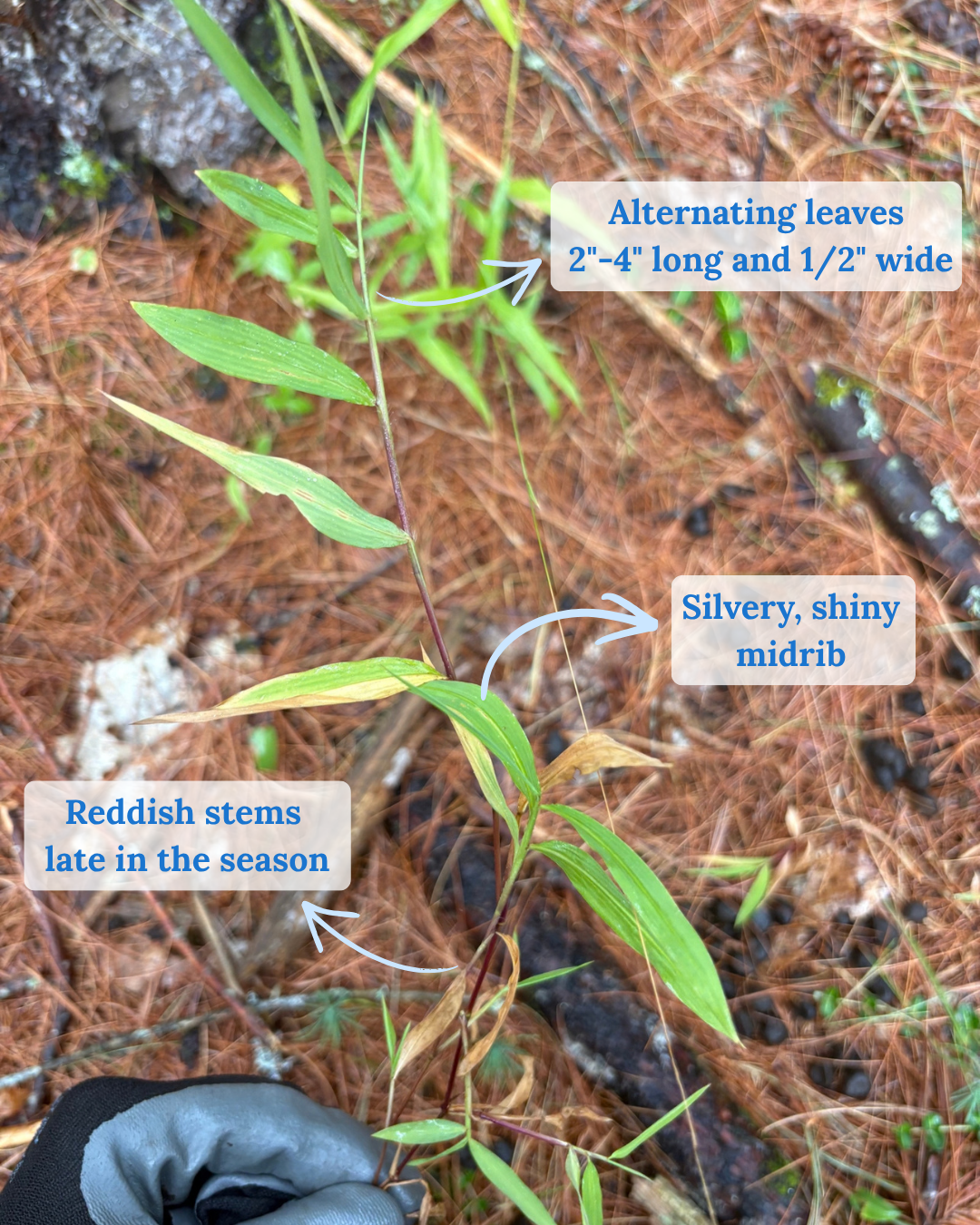
Japanese Stiltgrass Identification
What sets this grass apart from native look-alikes
While identifying grasses can be challenging, there are a few key characteristics that set this species apart from native look-alikes.
For one, stiltgrass has distinguishable silky smooth leaves that offer no resistance when rubbed between fingers. Native grasses, instead, are typically sticky and grippy when rubbed.
Stiltgrass also has alternating, well spaced leaves that grow about eight times as long as they are wide with tapered ends and smooth edges. The blades are shorter and broader than those on other grasses, sometimes described as resembling bamboo.
The leaves also have a distinctive off-center silver midrib, or central vein running along the middle of the blades, that is shiny and reflective in sunlight. It is often 1-3 feet tall with multiple smooth and mostly hairless stems, branching from the base of the plant. These stems may also develop a reddish color late in the season.
If it is flowering, the flowers are thin spikes at the top of the stem, one to four inches long. Stiltgrass flowers and seeds late in the season (September-October), far after many native grasses.
Also, as stiltgrass is an annual plant, the roots are very delicate and shallow when compared to our native grasses’ robust root systems. This makes stiltgrass very easy to pull, and native grasses will be more difficult to remove.
If it matches all of the physical characteristics, and comes out of the ground with ease, you’ve probably found invasive Japanese stiltgrass.
Japanese stiltgrass was first discovered in Maine in 2020 in both York County and Georgetown. It has since been detected in Sanford in 2022, and then South Berwick, West Gardiner, Westport Island, and Blue Hill in 2025. It is considered an Early Detection, Rapid Response (EDRR) highly invasive annual grass known for its aggressive growth and extreme resilience. EDRR is a quick and strict planning technique to remove early invasive species before they have a chance to spread. While the plants growth has been rapid, the Maine Natural Areas Program alongside regional land trusts and other local partners have been working hard to eradicate the relatively few populations before it’s too late. The management of this invasive is still currently doable through a combination of hand pulling, weed whacking, and targeted pesticide application.
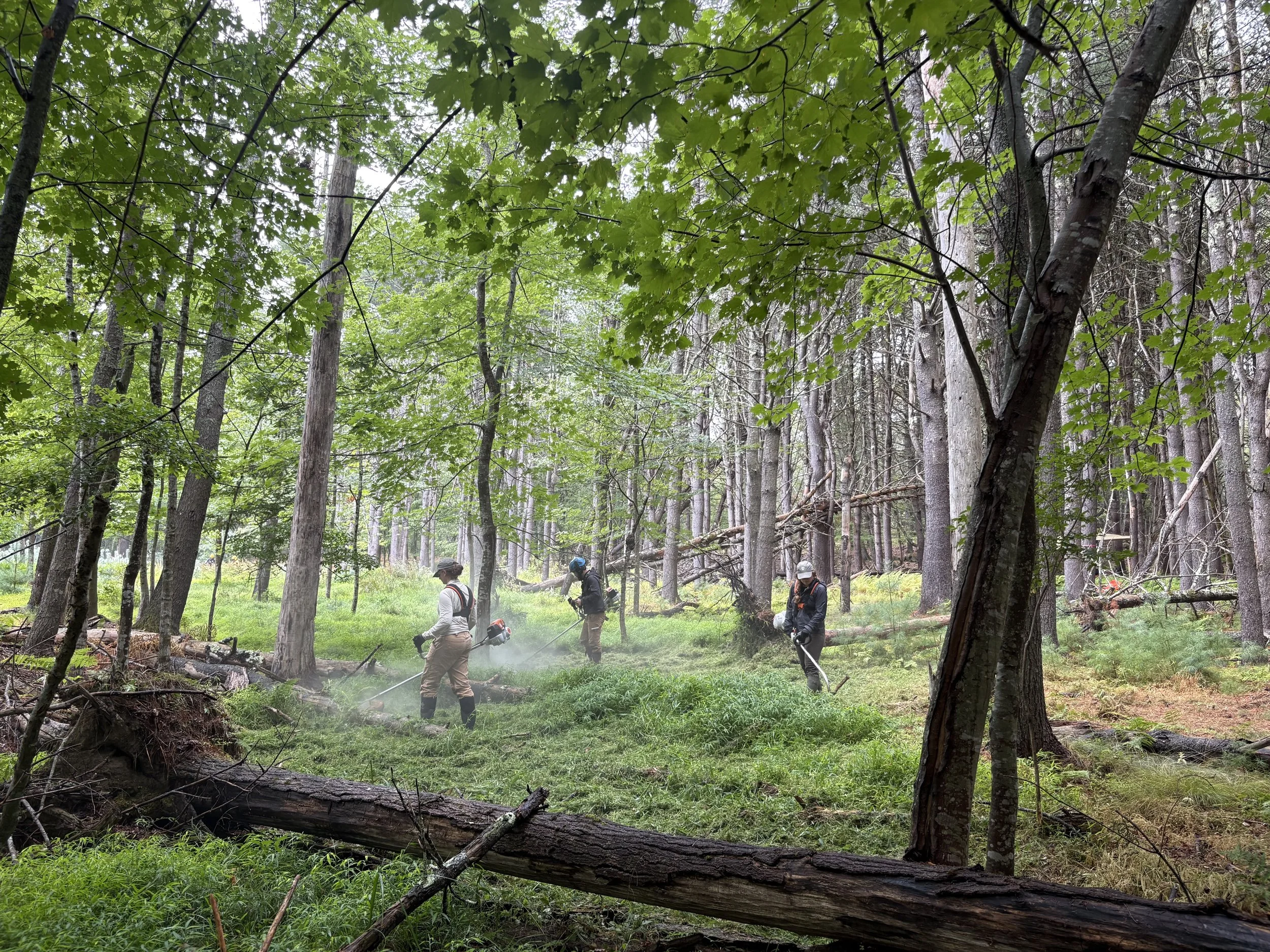
An Ongoing Effort to Eradicate Stiltgrass
The KELT team got out the weed whackers and joined forces with some incredible folks from all over the state
One of the clearest examples of what is required to combat stiltgrass occurred this summer in Georgetown. Earlier this month, as part of an ongoing effort to eradicate this particularly thick growth of stiltgrass, the KELT team got out the weed whackers and joined forces with some incredible folks from all over the state. Alongside crews from the Maine Department of Inland Fisheries and Wildlife, Maine Conservation Corps, Midcoast Conservancy, Maine Coast Heritage Trust, Coastal Rivers Conservation Trust, and The Nature Conservancy, we set to work.
What began as scattered patches had developed into a dense monoculture covering a significant patch of the woodland floor. This mat of stiltgrass had spread to a point where a single crew would have struggled immensely to remove it all. Thanks to an incredible showing of over 20 dedicated people, an effort that could have seemed impossible became manageable.
Every person had a reason to care about this project whether through nearby preserves, shared watersheds, or a general desire to reduce the spread of invasive species in our state. The commitment to combating stiltgrass was palpable from a crew that spanned half a dozen organizations.
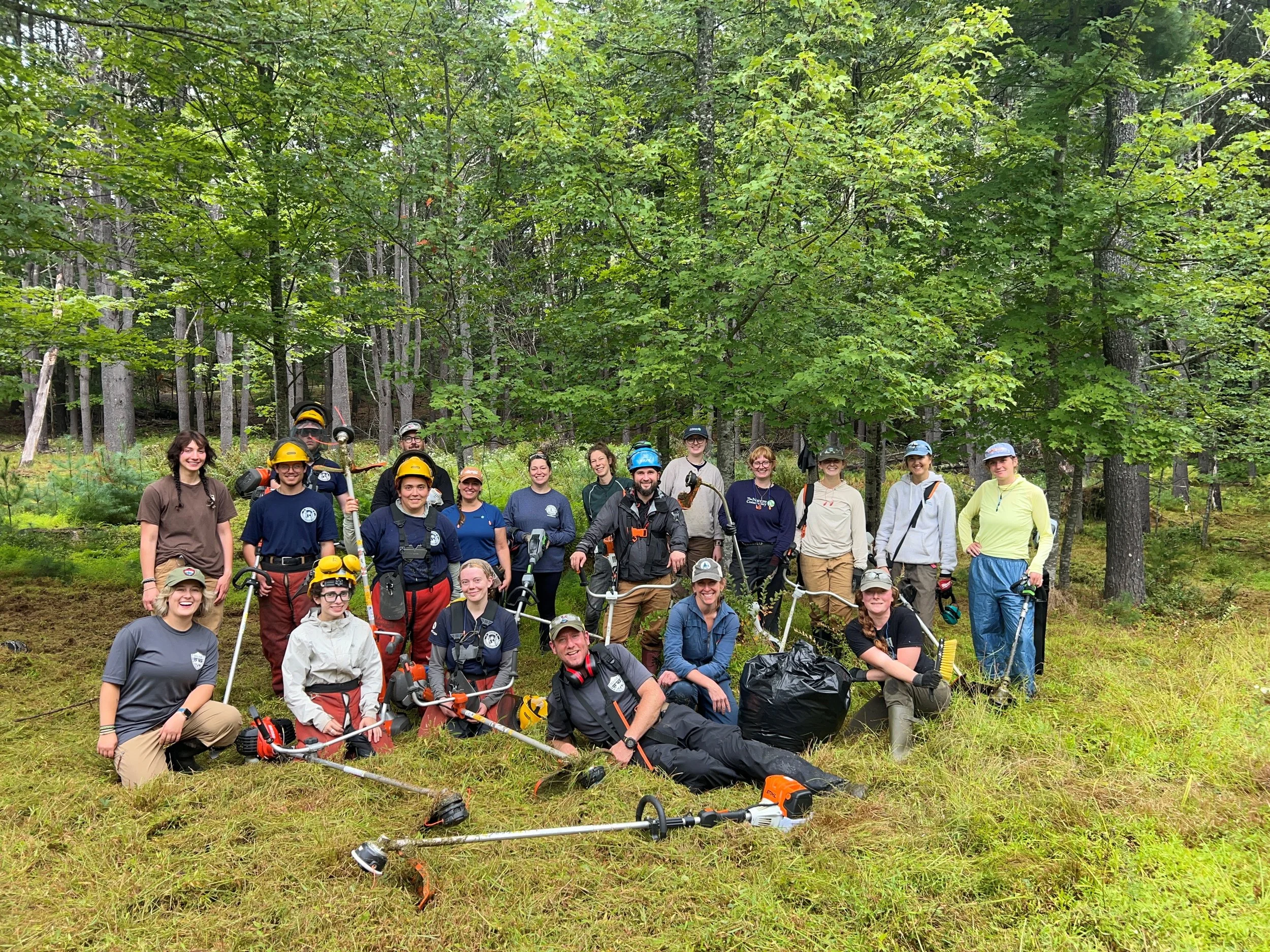
Teams from the Maine Natural Areas Program of the Maine Department of Inland Fisheries and Wildlife Ecology Group, Maine Conservation Corps, Midcoast Conservancy, Coastal Rivers Conservation Trust, Maine Coast Heritage Trust, The Nature Conservancy, and Kennebec Estuary Land Trust
Crew leads from KELT and Maine Natural Areas Program of the Maine Department of Inland Fisheries and Wildlife Ecology Group helped identify priority areas and polygons where native plants needed to be worked around carefully. It was loud, physical, repetitive work. Wet grass covered our boots and work pants, as our arms grew tired we switched from weed whacking to hand pulling to raking and back again. By the end of the effort, stiltgrass had been cut back across the entire site.
This removal happened at the ideal time, late enough in the season where the grass won’t have time to regrow, and before stiltgrass flowering enables widespread seed spreading to take place.
We combined efforts, pooled resources and skills, timed it perfectly, and cut back stiltgrass to the best of our ability, and yet this won’t be the end of stiltgrass on site. Unfortunately, the plant typically requires multiple years of removal efforts to truly be eradicated. However, the combined work of each organization made an enormous impact. This work makes follow up visits in the years to come less and less time and resource intensive.
KELT’s management goal is to stop the cycle of stiltgrass seeds. Unlike some other invasive species like honeysuckle and bittersweet, we are not just aiming to kill individual plants. We are hoping to manage stiltgrass before it goes to seed to ensure that there is no next generation. Stiltgrass has what is known as cleistogamous seeds, meaning that seeds grow inside the stems, hidden from within the plant; therefore it is also critical that plant biomass is properly disposed of to prevent cleistogamous seed spread.
We arrived at the issue of stiltgrass relatively recently after discovering a large patch near Clarey’s Pond in Georgetown and on KELT’s Zorach Preserve. One of the reasons why KELT has been able to mostly keep stiltgrass to a minimum on our Zorach Preserve property and boundary is because chemical control was considered early on. In contrast to the example of the large-scale effort of 20 people earlier this summer, chemical controls offer a highly effective solution that can be accomplished by a single person.
The biggest takeaway was realizing that stiltgrass is very sensitive: you can use a quarter of a normal dose of herbicide to kill the plant, while keeping surrounding native species safe and thriving. Our Preserves Manager, Dillon Mulhern, is a licensed Pesticide Master Applicator, a certification that requires 40-hour training with a strong emphasis on safe and regulated practices for applying pesticides. He has been applying a low-dose, diluted concentration to stiltgrass on our Zorach Preserve boundary for the past few years with visible results.
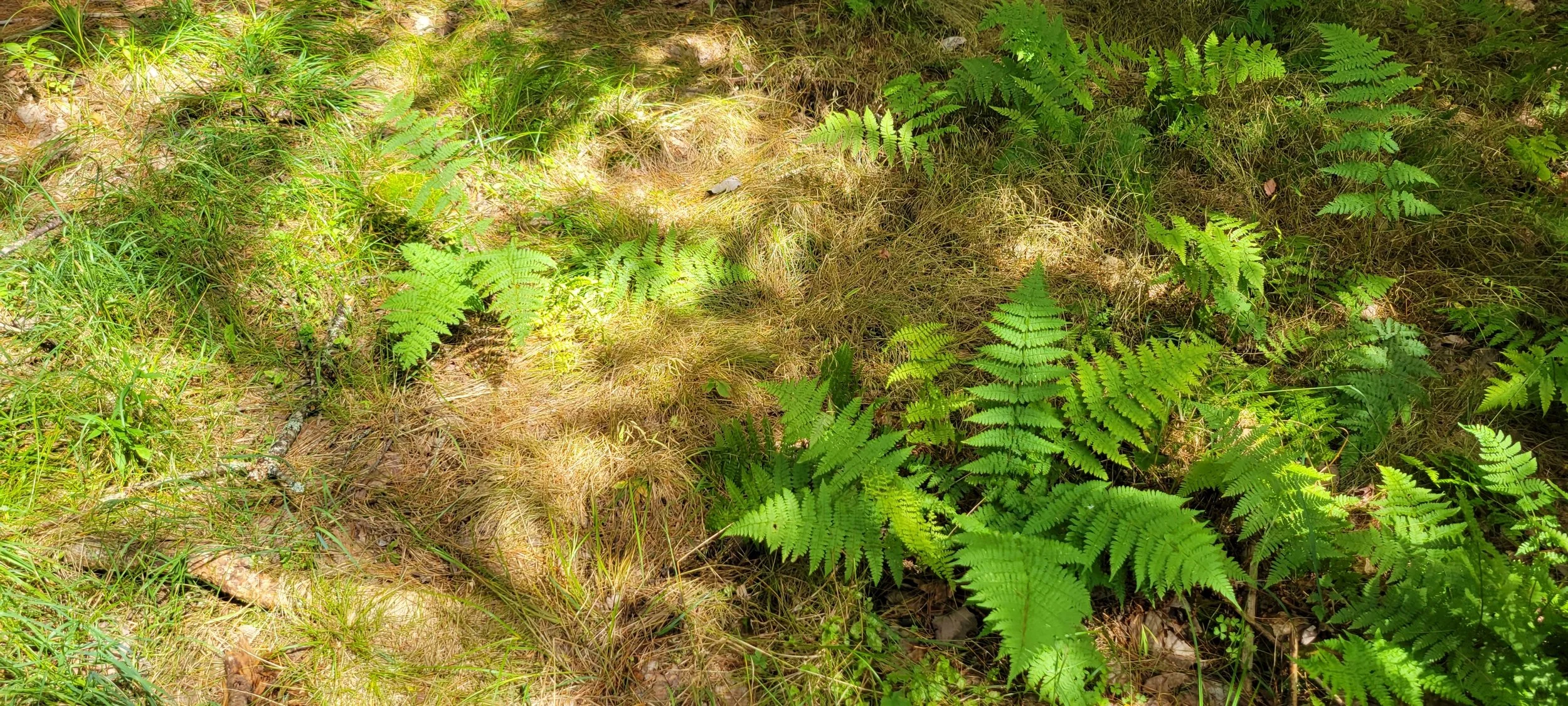
Post herbicide treatment, invasive stiltgrass has entirely died back while native intermediate wood fern (dryopteris intermedia) continues to thrive
While hand-pulling and mechanical weed whacking of stiltgrass can be effective, the sheer coordination and people hours required to attack it each year can be immense. It is important to utilize all our tools for mitigation, including chemical control, of this undesirable plant. With potentially 100 to 1000 seeds per plant, it is imperative that we eliminate the plant before it goes to seed in September and October to make sure that there is no next generation.
If you suspect you have found Japanese stiltgrass, note and send the location to invasives.mnap@maine.gov with photos included. If you are able to, you can also map the location and photos on iMapInvasives, an online mapping program accessible from a desktop or smartphone.
Before trying to manage the grass on your own, it is critical to contact an invasive species professional to help create a management plan.
The seeds also spread through both natural and anthropogenic means. Human intervention can easily increase the rate of spread if not handled carefully. After the Georgetown stiltgrass removal effort, gear didn’t leave the site until it was clean. We hosed down and scrubbed boots, pants, whackers, and rakes, making sure each was free of soil and plant matter that could allow seeds to hitch a ride to the next preserve, garden, or lawn.
It is imperative to clean your gear and use boot brushes when possible because stiltgrass’s tiny seeds can easily spread through mud or dirt tracked away from an infested site.
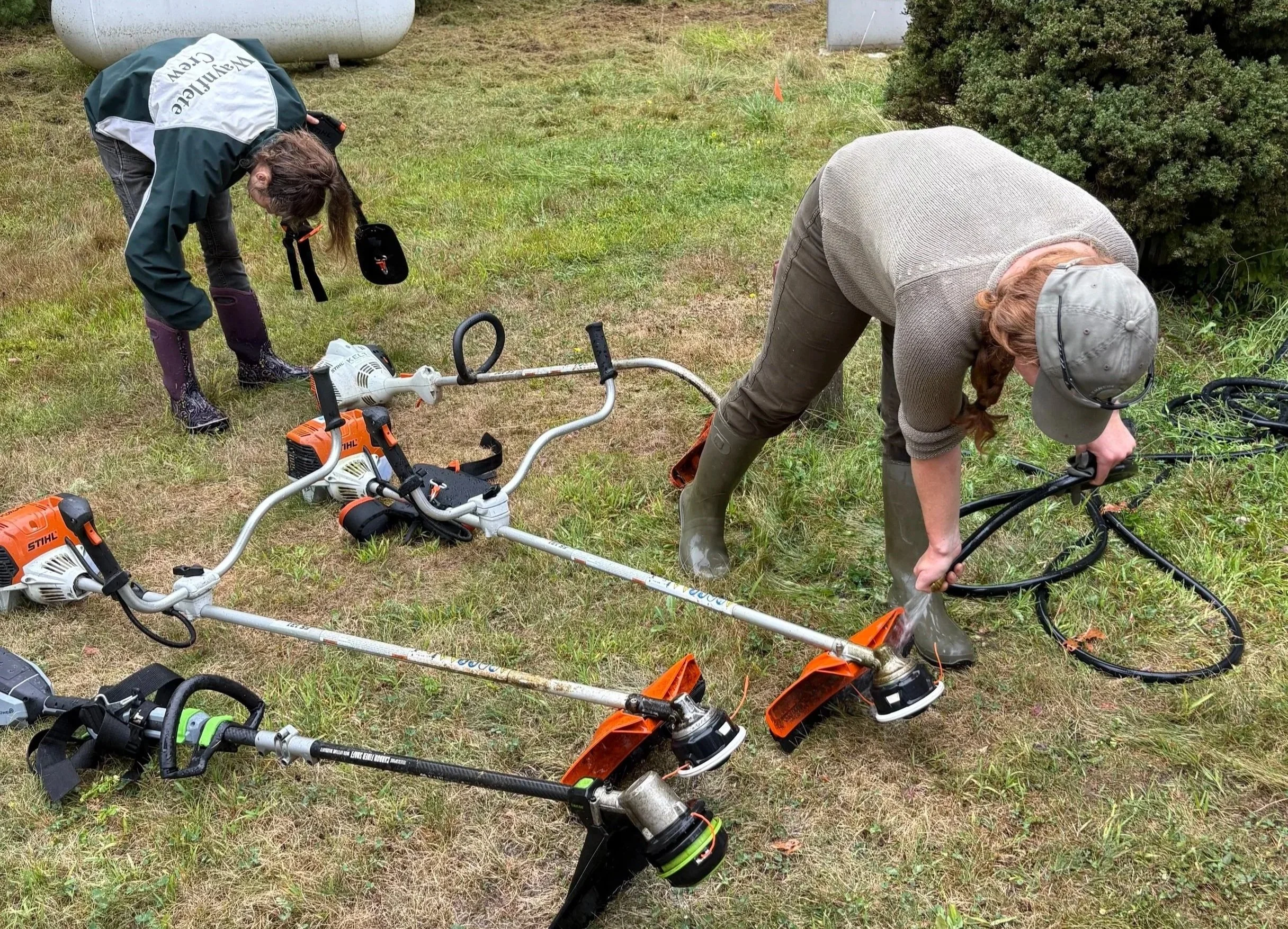
KELT and Coastal Rivers Conservation Trust staff cleaning off gear and boots before leaving the site
Invasive removal is an ongoing effort at KELT and throughout our state made possible by people like you who have decided to care. Taking the time to learn these invasives is a crucial first step in joining the fight against invasive species.
Our staff are always happy to help or answer any questions about what you can do to contribute to this work. With the ongoing support that enables organizations like KELT to get out there and fight back against these infestations, we’re hopeful that stiltgrass may yet become an invasive of the past in Maine.