Winter Birding in the Kennebec Estuary
Winter in Maine is a time of year that can bring out some mixed feelings. Sure, sometimes winter overstays it’s welcome a little bit but it does bring along some wonderful opportunities to enjoy being outdoors. It’s a great time for activities like snowshoeing, skiing, ice fishing, and my personal favorite, birding.
Birding during the winter in Maine is truly a unique time and not everyone realizes how lucky we are for our bird diversity. In most states across the country, birds will migrate out of the state and the species abundance gets significantly lower. And yes, we definitely have a significant amount of species leave for warmer places (not everyone is built for a Maine winter) but this state is unique in the sense that we actually gain a lot of interesting, migratory species that find Maine an ideal overwintering destination.
This winter, KELT was able to host several bird walks to explore our winter species that like to make Reid State Park their chilly home for a period of time. Reid has been one of my favorite destinations for winter birding due to the park’s unique combination of open ocean and then protected waterways, with a mixture of sand beaches, rocky coastline, and salt marsh. All of this diversity in habitat provides ample opportunity for seeing a lot of different species. We held two walks at Reid, one in early December to kick off the migratory period and one in March to have a chance to say goodbye to some of our favorite species before they head to their preferred breeding grounds.
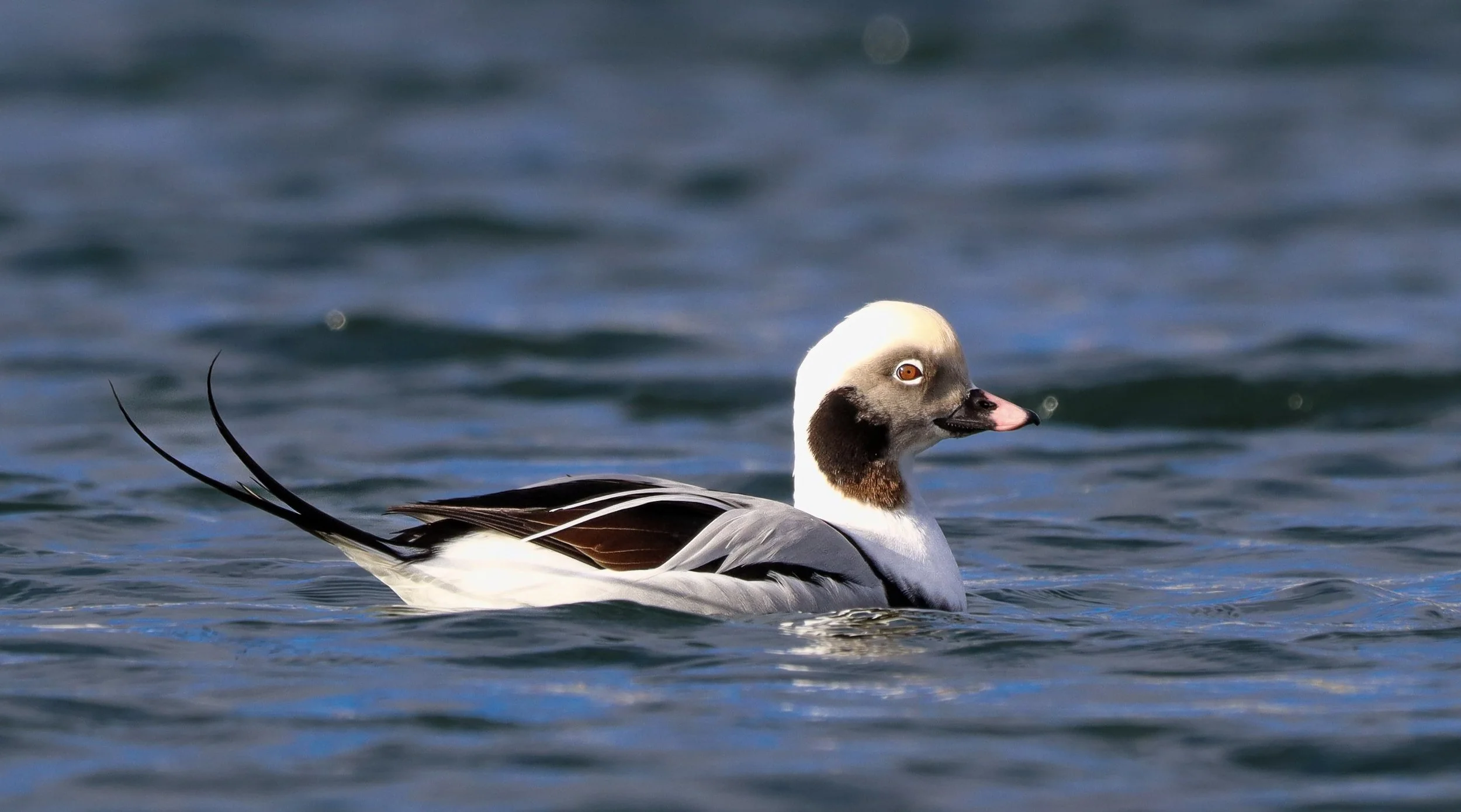
Male long tail duck in winter plumage.
Our first walk started at East End Beach on a typically breezy morning. We had a wonderful group of fifteen people with all levels of birding knowledge. After some quick introductions, we eagerly walked out to our first viewing point and got off to an electric start. We saw dozens of red necked grebes, common eiders, and long tailed ducks. The long tailed ducks especially being a favorite, as they are such an elegant species that aren’t very common across some parts of the of the United States. As beautiful as the long tailed ducks are, they still didn’t quite get the same level of excitement that a immature peregrine falcon got, as it flew across the open water, giving us a great chance to view it’s impressive flight. These falcons are year round residents that are known for using their record breaking speeds during flight to hunt a long open areas like shores, marshes, and valleys.
After enjoying a few moments at this location, we decided it was time to continue our walk up to Griffith head. On this walk, we spotted hundreds of Canada geese and quite a few American black ducks resting and foraging in the marsh. As we hiked to the top of Griffith head, we had a great viewing spot for seeing ducks in the open water. Here we spotted a lot of our “weird ducks” like white winged scoters, black scoters, more long tailed ducks, and even some double crested cormorants that were still braving the cold. Seeing the cormorants this time of year was a little surprising, as most double crested cormorants will migrate south to warmer weather, while the great cormorants will winter along the Maine coast line.
We stood at the top of Griffith Head for awhile, enjoying the scenery and the good company. Eventually, the wind wore us down and we called an end to a great morning of birding.
Now one undeniable truth when it comes to birding is that the weather is always going to have an impact on the birds you will see. A lot of the time, it’s something I love about being out in nature, it always makes it feel like a new experience, no matter how many times you’ve been to the same place. Unfortunately, in this case, it wasn’t something I was fond of.
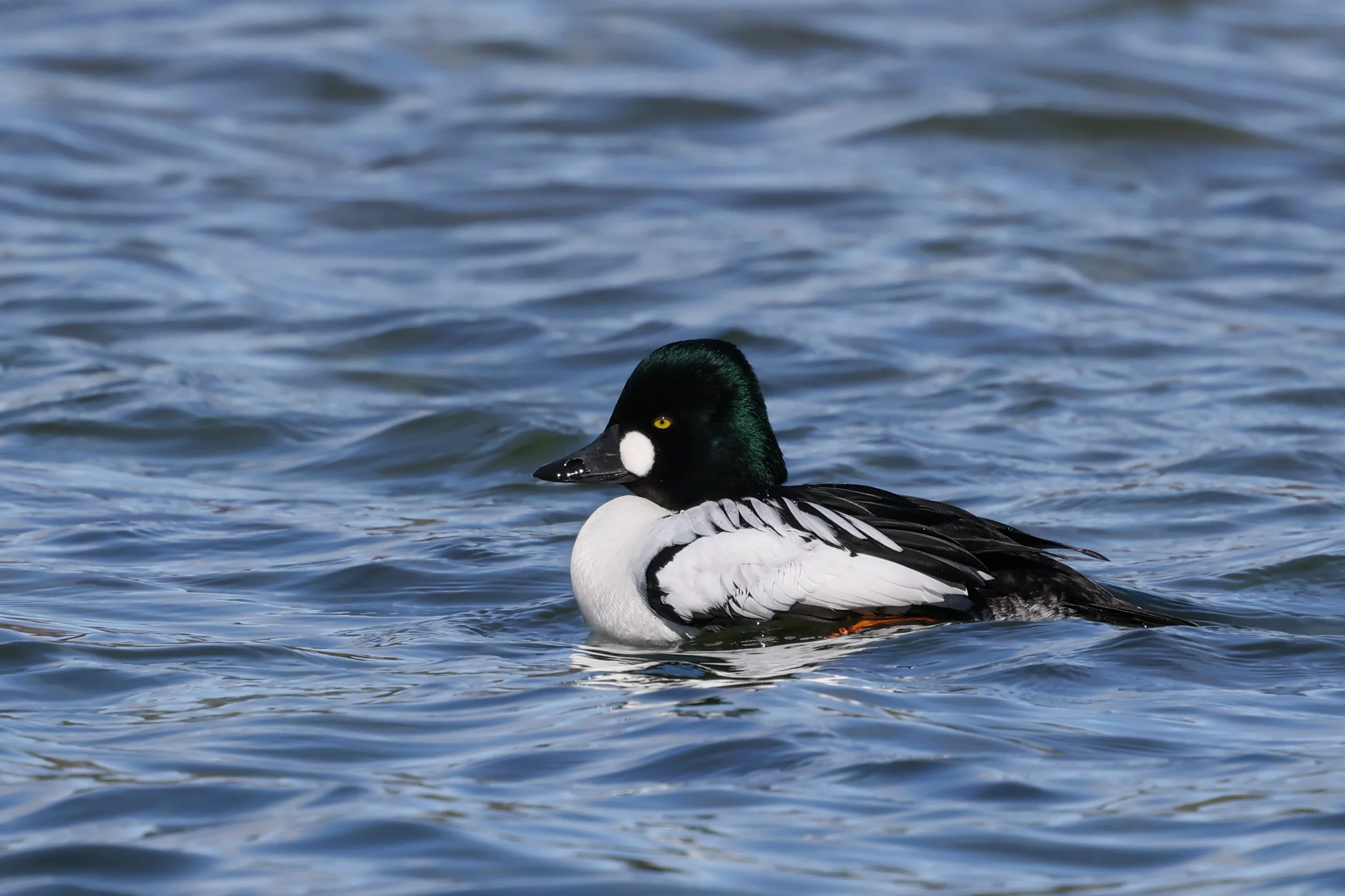
Male common goldeneye
For our March walk at Reid, it managed to be even more windy than the first, and this definitely had an impact on the amount of species we saw. We did the same path as we did for our December walk, starting at East End Beach. It was quite contrasting from our December walk, as when we first arrived, the water was filled with red necked grebes, eiders, and scoters. On this windy morning, there was almost no activity whatsoever. The waves were so intense, where if you finally spotted a bird, it would be gone in a moment between the rise and fall of the waves. We were able to spot a few common goldeneyes and a pair of loons before we moved on to a spot more protected from the wind.
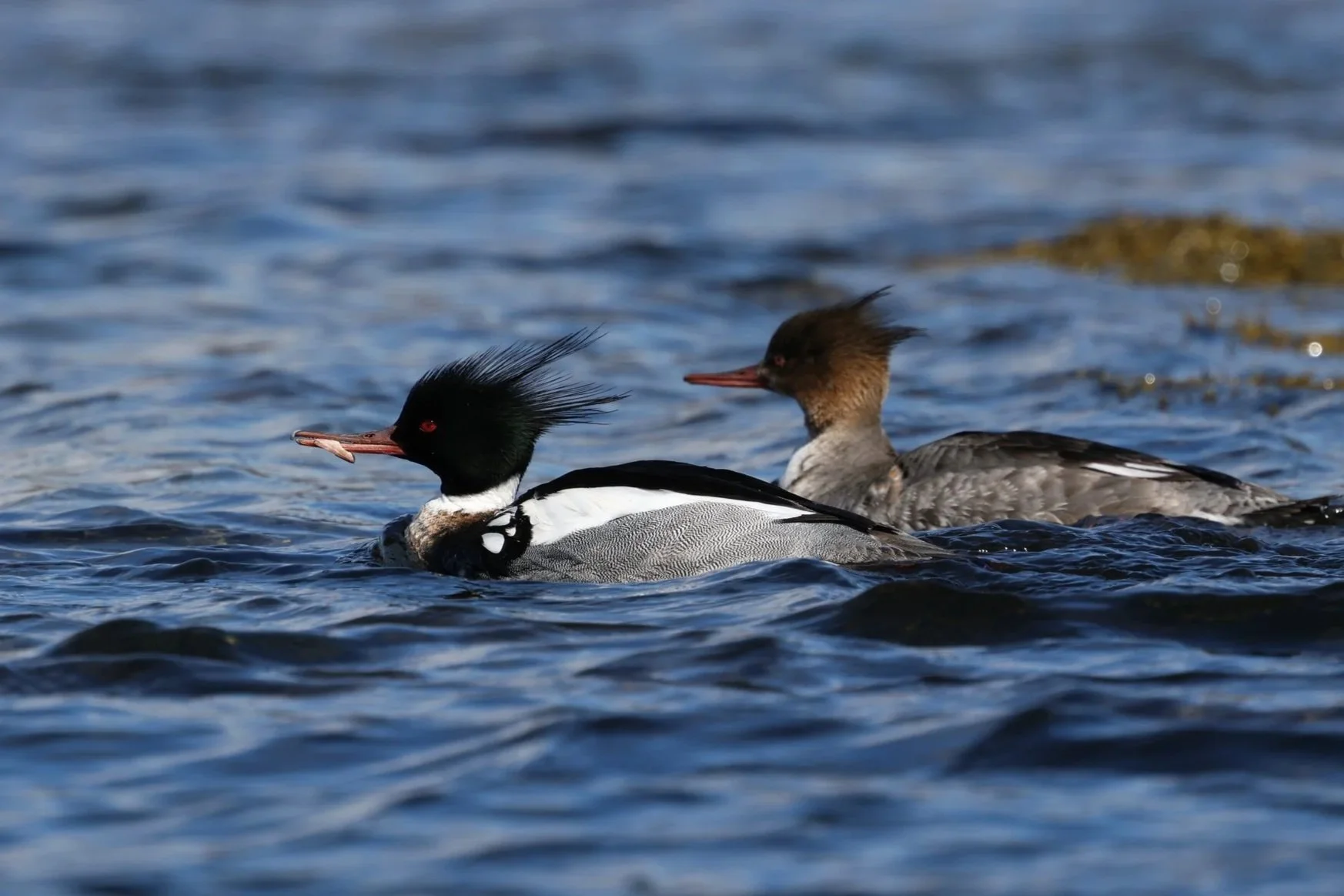
Male and female red breasted mergansers with a catch.
Our next stop was the bridge on the way to Griffith Head. This provided a much more protected habitat for the waterfowl we were looking for and we were able to spot a few more species. There were some buffleheads, common goldeneyes, and American black ducks all enjoying the calmer water but the star of the show had to be the red breasted mergansers. We watched the unique hunting style of these mergansers for awhile. They would stick their head under water like they were snorkeling, hunting in the shallows for small fish and crustaceans. Several times we saw a merganser pop it’s head out of the water with a small fish in it’s mouth, drawing excitement from the group.
Watching these red breasted mergansers really sparked some curiosity. I found out later that they are some of the fastest waterfowl in flight, being able to reach speeds of over 80 mph. Quite impressive for an animal that spends most of it’s time in water! Eventually it was time to say goodbye to the mergansers and make our way to Griffith Head.
Due to the windy conditions, there wasn’t a lot of activity. We saw a few pairs of long tailed ducks braving the waves far out in the water but there wasn’t much waterfowl asides from them. We did get quite the show from a pair of ravens potentially defending their future nesting site from a juvenile bald eagle off in the distance. After the eagle disappeared among the trees, we decided to call an end to another great day of birding.
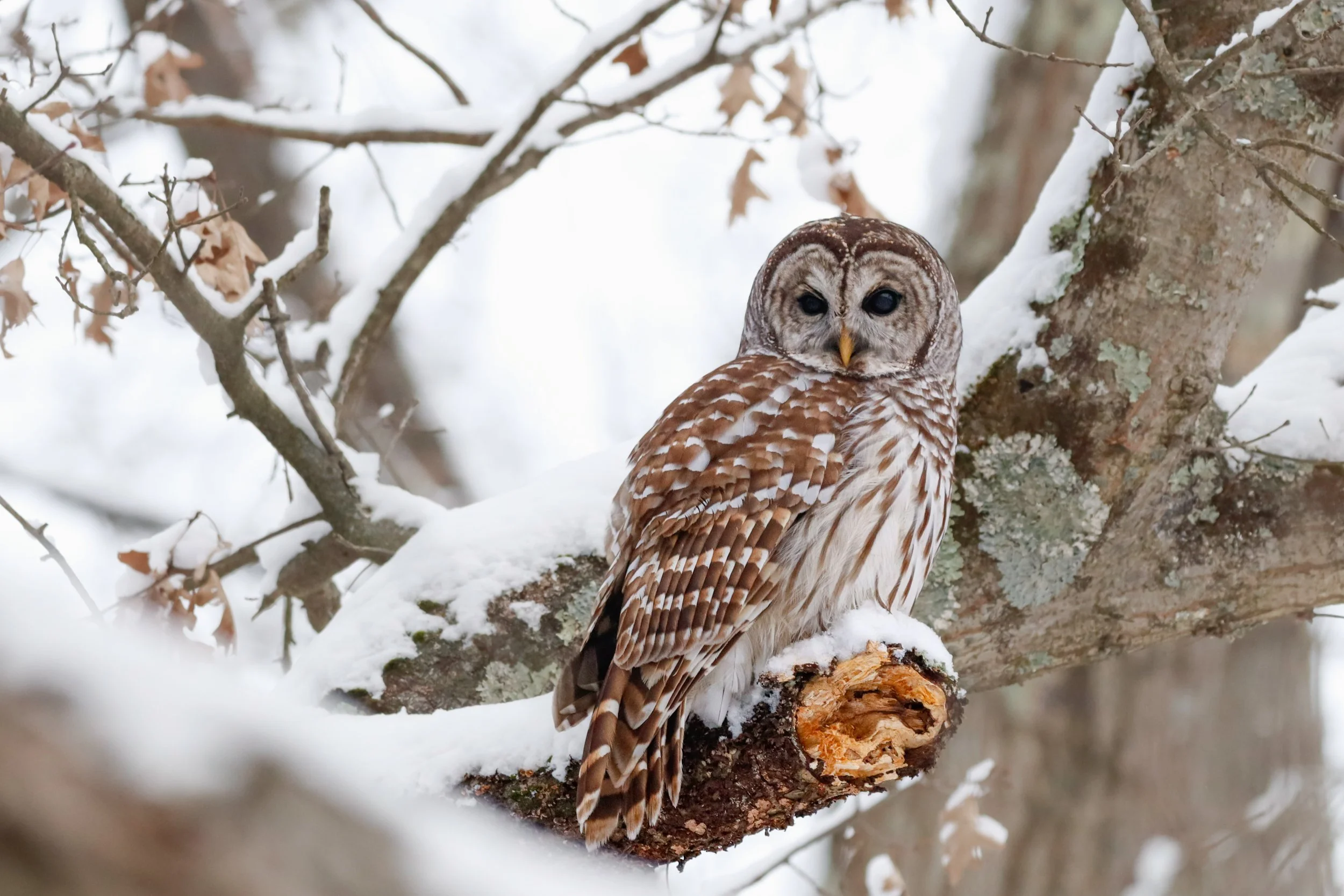
Barred Owl
In between our coastal walks, KELT had the opportunity to lead two owl prowls, one at KELT’s Lilly Pond Community Forest, and the other at the Mailly Waterfront Park as part of the town of Bowdoinham’s Ice and Smelt Festival. We had great turnouts for both of these owl prowls, especially for the Ice and Smelt Festival. It’s great to have a lot of participants at an event but unfortunately a bigger group size doesn’t help our chances with finding owls. We weren’t able to come across any owls on either of the owl prowls but that is pretty common for most owl prowls I have been on. Owls are amazing, elusive creatures that are only found if they allow to be seen or heard. An owl can hear a mouse from over half a mile away, so imagine how easily an owl can hear a group of people crunching through the snow.
I like to treat an owl prowl like an educational walk, where seeing or hearing an owl is a bonus. We were able to talk about all these amazing adaptations that owls posses. Between their large eyes that let in 10x the amount of light ours do, their cryptic coloration that makes them so difficult to spot, and the 14 neck vertebrae they have that allows them to turn their neck 270 degrees in each direction. We were also able to share what the calls of some of our native owl species sound like, so participants could hopefully identify them if they ever hear them calling around their homes.
It’s fun to get outside with interesting people right at dusk, finishing our walks well after sunset. Even without spotting any owls, it’s an experience that helps to connect with the nocturnal side of nature. We saw the interest that our community has in owl prowls, so for next year, we plan to offer more options for owl prowls, with capped group sizes to help improve our chances of coming across owls.
These four winter bird walks were something I enjoyed getting to host. It always feels a little bit more rewarding in the winter time when you are able to spot an interesting species or get a high bird count. It feels like you really had to earn it. I also find it’s a time of year that brings out some of the most passionate and dedicated birders out there. If you were able to join us for one of these walks, thank you for attending! Everyone that attended were wonderful participants. If you’re interesting in joining KELT for a guided bird walk in the future, please check out our website event calendar. We’ll be posting some upcoming spring dates soon!
If you weren’t able to attend these walks but were curious about some of the species we saw, here are the links to our eBird checklists for Reid State Park:
Walk: https://ebird.org/checklist/S287278624
March Walk: https://ebird.org/checklist/S306273802