A Native Pollinator Garden on KELT’s Front Step
If you’ve taken a drive through downtown Bath over the last few weeks, you may have noticed our hard working staff outside KELT’s headquarters lifting rocks or pushing wheelbarrows of wood chips. We’re very excited to announce the culmination of this group effort: a new native pollinator garden.
The Native Pollinator Garden:
A Living Clock
First things first, we have to recognize the team behind this enormous endeavor. Jaime, Andrew, Dillon, and Lindsey, thank you for your hard work! To our volunteers that came out on multiple Stewardship Workdays, thank you for your dedication. You have transformed KELT’s front lawn into the foundation of a thriving native pollinator garden.
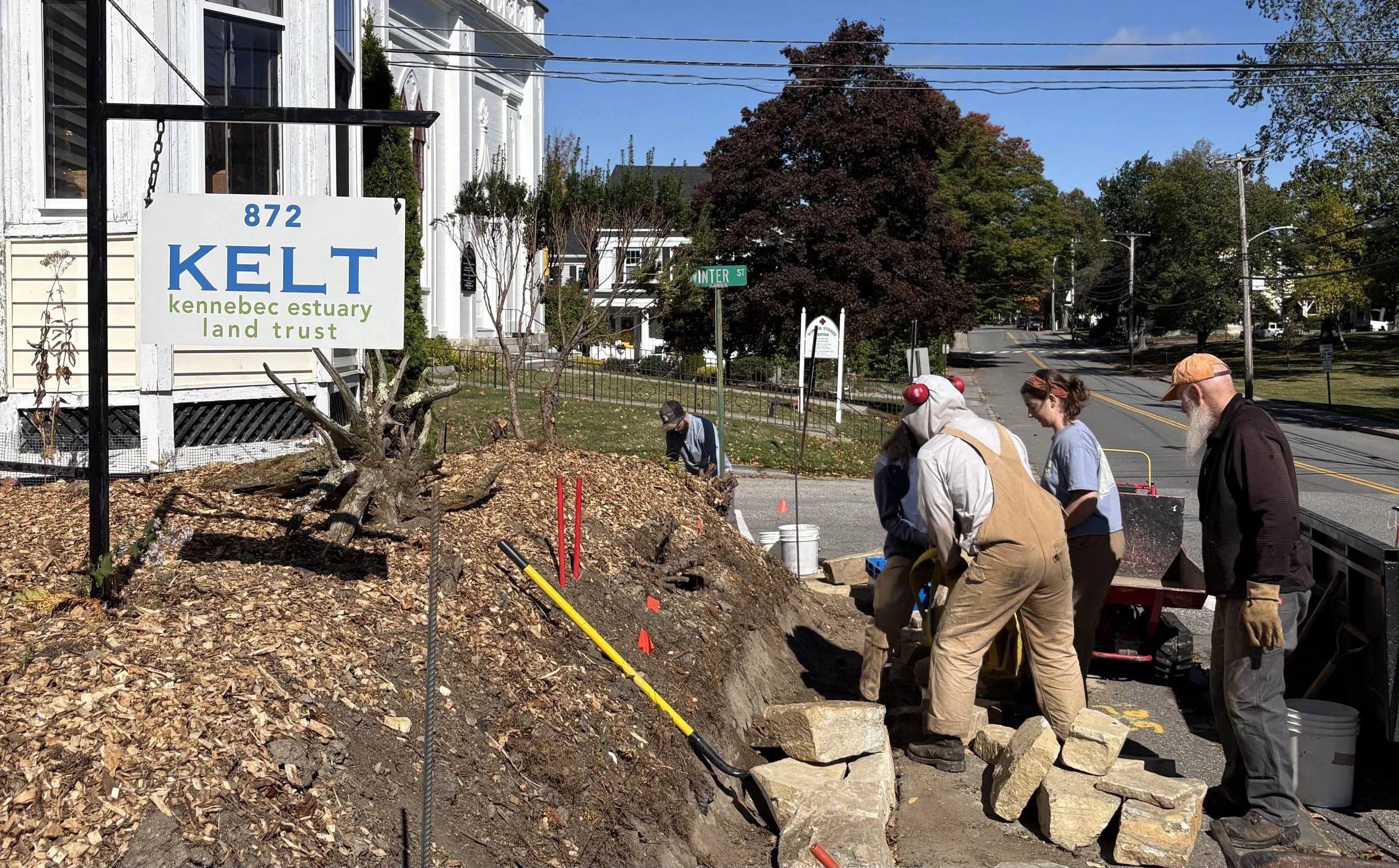
KELT Staff and Volunteers building a rock wall to retain the garden bed soil
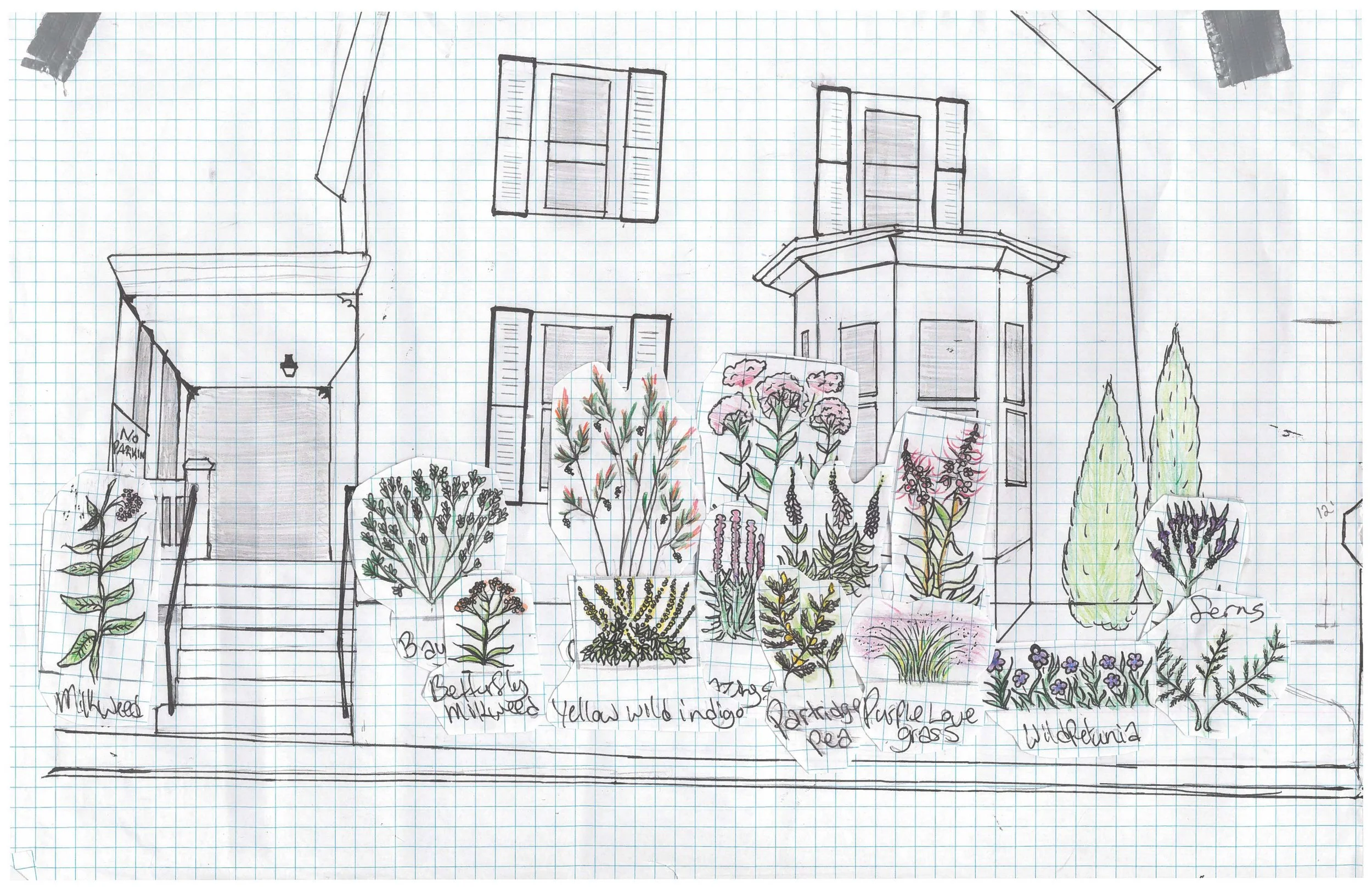
Jaime, KELT’s Project Coordinator, took the lead on planning exactly what would go into the garden. With careful consideration of various native plants’ timing, ecological purposes, and aesthetics, Jaime has crafted a beautiful plan for this blossoming garden.
Andrew, the Land & Stewardship Director, was a guide in the construction of a rock wall that not only provides practical soil retention but also complements the visual style of our community’s neighborhood on Washington Street in Bath.
These two, alongside Stewardship Manager Dillon and Seasonal Steward Lindsey, as well as our steadfast crew of volunteer stewards, have crafted a front garden to be proud of. It is the very first thing visitors see, a clear example of an influenced environment that KELT stewards. We felt it was time for this stewardship to truly reflect the exciting story of KELT’s work inside the headquarters or out on our preserves.
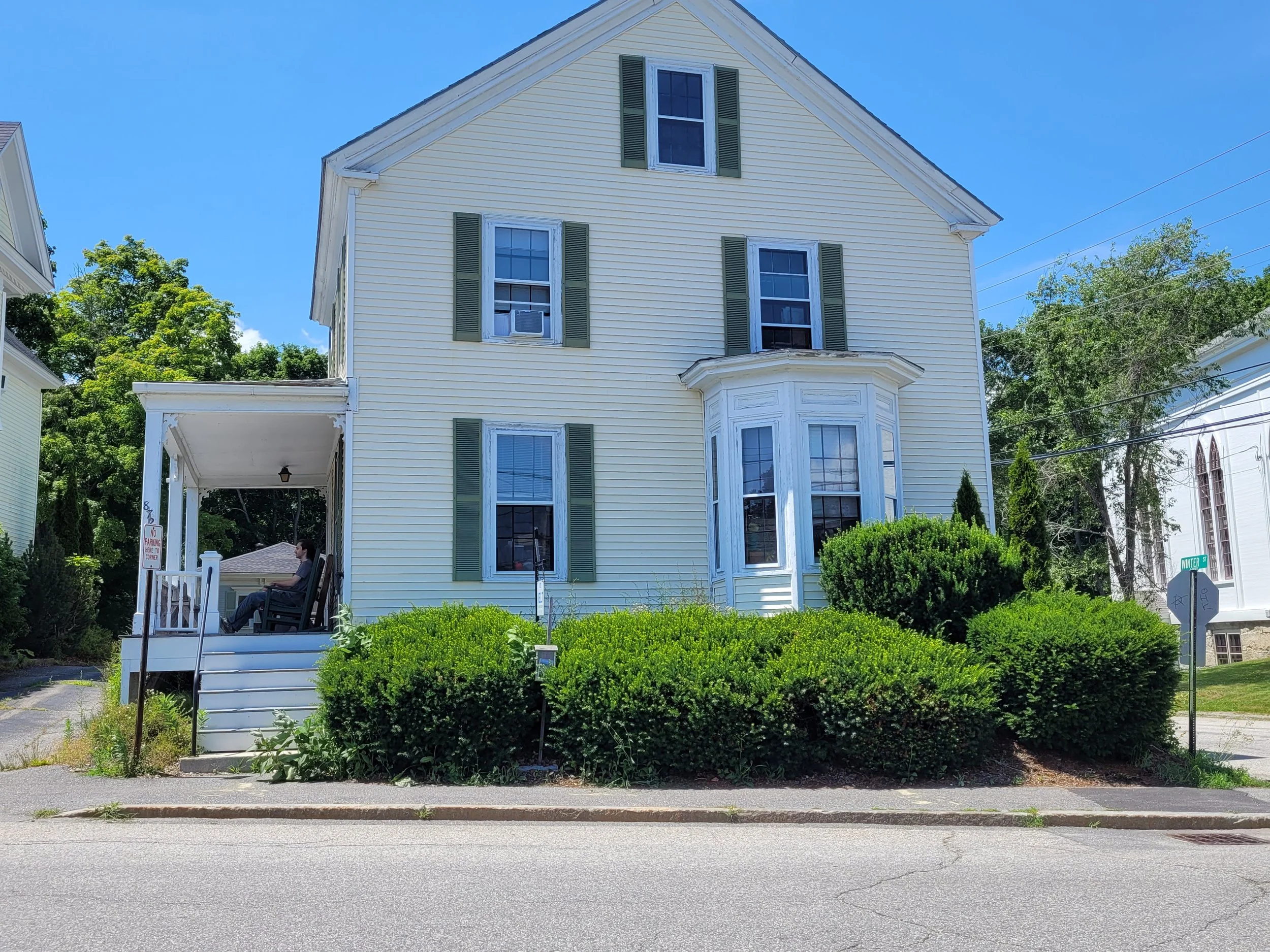
The original front garden, with non-native yew bushes blocking driver’s views at the intersection
As explained by Andrew, “As a conservation organization, we want to demonstrate to our community what landscaping with native plants can look like. Removing the existing yew bushes also enhanced the visibility for drivers with the intersection of Winter Street and Washington Street. KELT used in-house staff expertise to build the rock wall to retain the garden bed soil and in choosing native plants and collecting native plant seeds.”
We hope the Pollinator Garden demonstrates that at KELT, stewardship is about much more than aesthetics. It's about preserving native plant populations, uplifting pollinators, and creating self-sustaining ecosystems that tie our garden into the larger landscape of stewarded land we’re working to protect.
KELT’s goal with the garden is to create a habitat for native pollinators, aiding in the regeneration of native plant species around Bath. KELT was able to secure native plants from a sale that happened at Coastal Rivers Conservation Trust in partnership with Maine Native Plant Cooperative. Before acquiring them, a crucial part of this process was deciding what plants would be introduced to the garden and when. From thorough spreadsheets to a striking visual mockup, Jaime’s research laid the groundwork for an impactful and intentional array of native plants.
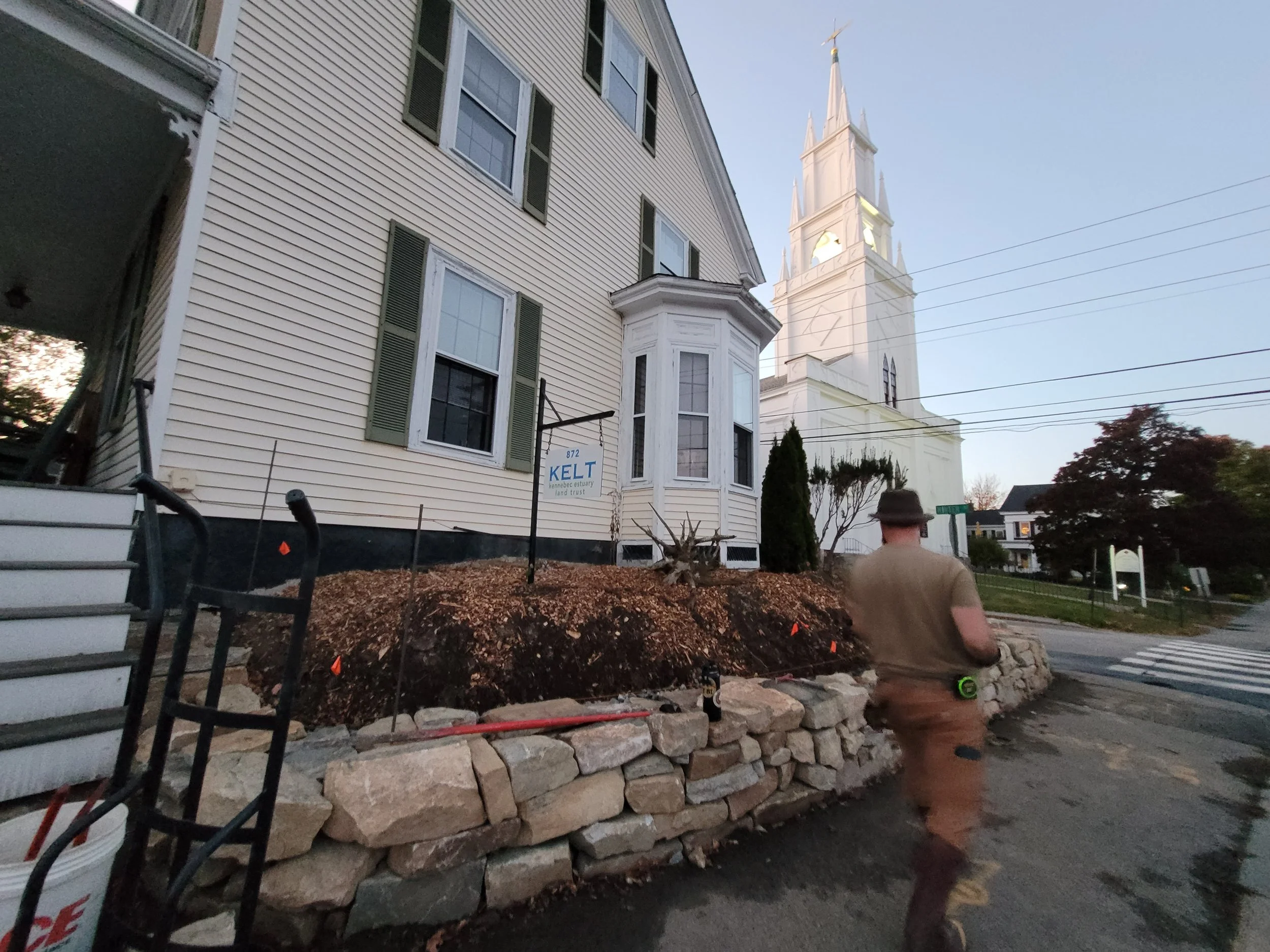
The beginnings of a Native Pollinator Garden with a completed rock retention wall
“When choosing plants for the pollinator garden, I thought about succession blooming and about the plants I wanted to pay more attention to. I wanted to note the progression of the season by which plants were flowering as others would fade out and the overlaps from spring to summer and fall. I found myself looking at a living calendar that I'm very excited to pay attention to. The first sign the season is underway begins with Yellow Wild Indigo, then passes to Beardtongue in the late spring. Summer is signaled with the vivid orange of Butterfly Milkweed and that will slowly fade with the season. As we reach midsummer, Wild Petunia carries the garden forward, and the telltale signs summer is coming to a close happens when we see Partridge Pea and Purple Lovegrass becoming more showy. But some aren't just pollinators, the Partridge Pea is a nitrogen fixer and a daily timekeeper as it displays nyctinasty, folding its leaflets together every evening as the sun sets, communicating to me that the day is over!”
This is just the beginning of an ongoing project that exemplifies the potential of lasting impact through stewardship. As of now, we have a space for young native plants to take root and a successfully constructed rock wall. Come springtime, we expect to see bountiful pollinators around KELT’s headquarters. In the summer, we hope that the garden might pique the interest of migratory birds. By the fall, we hope monarch butterflies will flutter about the garden’s milkweed at the beginning of their long journey south.
Our team is so excited to see many crucial species make themselves at home in KELT’s pollinator garden. The front of our building is more than just an entry way; it’s a clear, publicly visible demonstration of KELT putting action behind our ideals, and one that we hope will encourage others to do the same.
Come by and check out KELT’s new pollinator garden. The native plants (and soon-to-be birds and bees) are excited to see you! And, if you’re feeling inspired by what you see, know that you don’t need a big yard to start a native garden. A few potted plants or a garden bed will also make a difference. Or volunteer with KELT and support this work while growing your green thumb. If you’re interested, come see what’s blooming. We’d love to hear what you plant at home.