Green Crab Monitoring
Why Monitor Green Crabs?
Green crabs are an invasive species that threaten clam populations, eelgrass beds, and local marshes. To find out more about these crabs, KELT purchased green crab traps with the help of a grant from the Maine Outdoor Heritage Fund in 2014. Since then, these traps have helped to gather information about crab populations in our region. KELT used them to work with students at Bath Middle School to trap green crabs and document information about their populations each fall.
Get Involved!
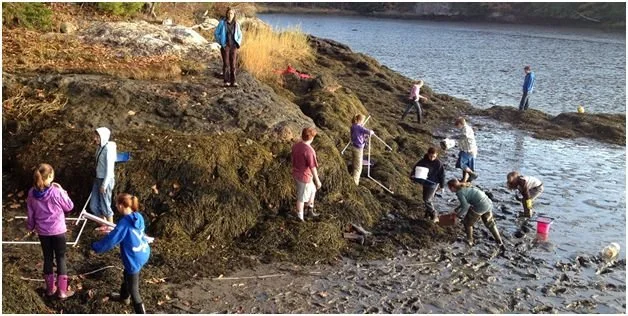
Bath Middle School 7th grade students and teachers spend their fall exploring information about local fisheries. This exploration includes learning about invasive green crabs and trapping them to find out information about their population and how it changes over time.
If you are interested in supporting an in-classroom exploration or fieldtrip, reach out to Ruth Indrick (rindrick@kennebecestuary.org or 207-442-8400).
What Have We Learned?
Sponsors
Maine Outdoor Heritage Fund
The Margaret E. Burnham Charitable Trust
Resources for Volunteers
Maine Green Crab Summit – information and presentations from the December, 2013 Green Crab Summit
Green Crab Trap Types Used in the Kennebec Estuary
Eel Trap
Minnow Trap
Modified Lobster Trap
Shrimp Trap
Acer Crab Trap
What's a Green Crab?
Green Crabs have 5 spines on each side of their eyes
Their carapace (shell) is roughly pentagon shaped
The crabs can be green, brown or red
Green crabs rarely grow larger than 3 1/4 inches
The size measured is the width of the crab at the widest part of its carapace – from the tip of one spine to the other
Females have a rounded “Beehive” shape on underside, while males have a pointed “obelisk” shape
Stories From the Shores
Bath Middle School Green Crab Population Study
‘Bath Students, KELT, Team Up’ in The Times Record 10.28.2013
‘Bath Students Obtain ‘Real’ Learning: Conducting Green Crab Study’ in The Times Record 10.27.2014
Georgetown
‘Clam Farming Eyed as Possible Solution to Green Crab Invasion’ in The Times Record 12.18.2013
‘Clam Class: KELT event teaches explorers of all ages’ in The Times Record 7.18.2014
Woolwich
‘Woolwich Clammers Prepare to Fight Back’ in the Wiscasset Newspaper 1.8.2014
‘Woolwich Students Help Out: Clam Seed Study’ in The Times Record 5.27.2014
Arrowsic